Monday, June 2, 2014

Republicans call for hearings on Bowe Bergdahl prisoner swap

Republicans call for hearings on Bowe Bergdahl prisoner swap

This image from a video released by a Taliban affiliated group on Nov. 24, 2010 shows captive U.S. Army Spc. Bowe Bergdahl alongside his suspected captor, Mullah Sangeen Zadran. CBS
Several Republican lawmakers on the House and Senate Armed Services Committees say that Congress should examine whether President Obama acted within the bounds of the law by exchanging five former Taliban leaders for Army Sgt. Bowe Bergdahl in a prisoner swap without consulting Congress.
At issue is the law that requires the defense secretary to notify Congress 30 days before transferring any detainees out of the prison and explain why they will not be in a position to harm the U.S. again.
"I think in the eyes of many, he broke the law by not informing Congress 30 days before that," California Rep. Buck McKeon, the chairman of the House Armed Services Committee, said in an interview on MSNBC Monday.
"You just had Ambassador Rice, she said they'd been working on this for three years. She said Congress has been informed of this along the way. I don't know who they were talking to. I have not been a part of this, and I'm the chairman of the committee."
McKeon said his committee plans to hold hearings into the issue, and said it should not be viewed as a partisan move.
"It was important for our national security. It's important for our responsibility of oversight of the administration and our national security," he said.
On the Senate side, Sen. Lindsey Graham, R-S.C., has written to Senate Armed Services Committee Chairman Carl Levin, D-Mich., and Ranking Member Jim Inhofe, R-Okla., to follow suit. Graham, however, seems more concerned with the possibility that the former detainees could return to battle than the legality of their release.
"The five terrorists released were the hardest of the hard-core," Graham said in the letter. "They have American blood on their hands and surely as night follows day they will return to the fight. In effect, we released the 'Taliban Dream Team.' The United States is less safe because of these actions."
Graham added that he is concerned that the move will "inevitably lead to more Americans being kidnapped and held hostage throughout the world."
Another letter from Sen. Kelly Ayotte, R-N.H., raised similar concerns in her request for a hearing, but also asked that Congress ask why the administration did not comply with the reporting requirement.
The administration has defended the move, citing the decline in Bergdahl's health and the fact that they had previously consulted with Congress on the issue. White House Press Secretary Jay Carney also stressed Monday the urgency of acting while the deal with the Taliban was still on the table.
"Hoping that opportunity remained open was not an option," Carney said. "When the opportunity presented itself and we could successfully recover him we acted quickly to do so."
The administration began notifying members of Congress the moment Bergdahl came into U.S. custody, Carney said.
But he added that that the president has used "signing statements" - including the law that includes the 30-day reporting requirement - to assert executive authority on negotiations with foreign powers in circumstances like these.
"We have repeatedly noted concerns with this requirement," Carney told reporters. "In signing statements, he, the president, has consistently made clear that the executive branch must have the flexibility to act swiftly in conducting negotiations with foreign countries regarding the circumstances of detainee transfers if necessary."

U.S. Special Forces, Foreign Troops Practice Invading Tampa, Florida

U.S. Special Forces, Foreign Troops Practice Invading Tampa, Florida


News groups promise invasion is not "Russians" or "New World Order."
(by MIKAEL THALEN, Infowars.com)
U.S. Special Forces and commandos from as many as 19 foreign nations practiced “invading” Tampa, Fl. this week during an unprecedented international training exercise.
Conducted outside the Tampa Convention Center Wednesday, residents looked on as service members from every branch of the U.S. military ran drills alongside commandos from Belgium, Canada, Colombia, Croatia, Czech Republic, Denmark, Estonia, Finland, France, Germany, Ireland, Jordan, Latvia, Netherlands, Norway, Peru, Poland, Sweden and Thailand.
Local newspapers worked to relieve worried residents prior to the exercise, assuring them that the sound of gunshots and low-flying military helicopters was only part of a drill.
“If you see military helicopters flying over downtown Tampa next Tuesday, it’s not a sign that we are under attack by the Russians, the North Koreans or the New World Order,” said The Tampa Tribune.
According to the training scenario, commandos were tasked with rescuing Tampa Mayor Bob Buckhorn from an “insurgent village” held by “violent extremists.” Helicopters, boats, ground mobility vehicles, and commandos unloaded blank rounds as a 14-man team worked to locate the mayor. Loud pyrotechnics were used as four snipers on the roof of Tampa General Hospital surveyed the mayor’s rescue.
“It was fun,” Buckhorn told reporters. “I love doing this. I love supporting Socom and the men and women that serve there.”
The demonstration was held in conjunction with the fourth International Special Operations Forces conference, where delegates from 84 nations met to strengthen “the Global SOF Network.”
High-ranking members including Army Lt. Gen. Joe Votel discussed several topics including the “nightmare scenario” of “Sunni extremists or extremist organizations” obtaining biological, chemical, radiologic or nuclear weapons.
“I think we have to be concerned about them falling into the hands of people who would have less difficulty employing those and for me that’s why I think this is hugely important,” Votel said while also mentioning the situation in Syria. “I do think we have to be very, very concerned.”
A noticeable increase in domestic urban warfare exercises, like the unannounced 2012 military helicopter drill over Miami that used simulated gunfire, has made many uncomfortable given recent revelations about military training aimed at mainline Americans.
Army troops at Mississippi’s Camp Shelby blew the whistle last October after being told that the American Family Association, a mainline Christian ministry, was a domestic hate group similar to the Ku Klux Klan.
Soldiers at Fort Hood were recently warned that anyone supporting anti-abortion, Christians or Tea Party groups could face disciplinary action under the Uniform Code of Military Justice. Soldiers were told that such groups presented a major domestic terror threat to the country.
In August 2013, a Department of Defense training manual uncovered by the conservative watchdog Judicial Watch labeled supporters of “individual liberties” and “states’ rights” as “extremist.” The manual also warned military personnel against “active participation” with such organizations.
The U.S. Army’s new 300-acre “fake city” in Virginia, where troops allegedly train for foreign combat scenarios, more closely resembles an American city than a foreign one. Complete with a replica Washington D.C. subway and a Baptist church, the training center seems to mirror the shift in training material.
Leaked Marine Corps’ documents provided to Infowars this month showed how a seperate military urban training center in North Carolina was updated to include a Baptist church and farmhouses, transforming it from its original foreign appearance.
Given the fact that a large portion of U.S. troops align themselves with conservative values, the federal government’s actions towards the military is unsurprising. In 2009, former Homeland Security Secretary Janet Napolitano stood by a report that labeled returning military veterans as the main terror threat.

Sunday, June 1, 2014

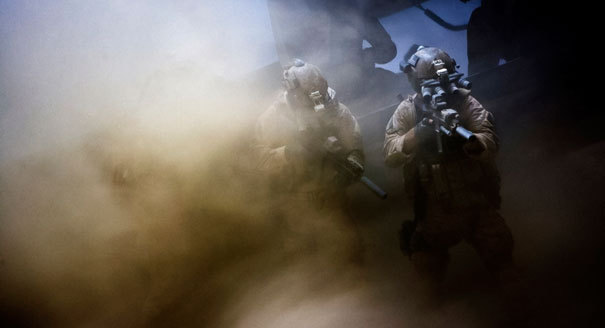
FLASHBACK -- Over 20 SEALs Who Killed Osama Bin Laden Now Dead... SEAL Team 4 Commanding Officer best known for finding & then killing Osama bin Laden commits suicide.

FLASHBACK -- Over 20 SEALs Who Killed Osama Bin Laden Now Dead... SEAL Team 4 Commanding Officer best known for finding & then killing Osama bin Laden commits suicide.

seals-in-smoke1.jpeg
SEAL Team 4 Commanding Officer Job W. Price 'commits suicide.' He was best known for finding and then killing Osama bin Laden.
Cmdr. Job W. Price, 42, died Saturday, Dec. 22, of a non-combat-related injury while supporting stability operations in Uruzgan Province, Afghanistan.
Suicide of the Officer of this grade raises many questions among the media, as the team was best known for killing Osama Bin Laden that assaulted his compound in Abbottabad, Pakistan on May 1, 2011.

I’s search for ‘Mo,’ suspect in bomb threats, highlights use of malware for surveillance


The man who called himself “Mo” had dark hair, a foreign accent and — if the pictures he e-mailed to federal investigators could be believed — an Iranian military uniform. When he made a series of threats to detonate bombs at universities and airports across a wide swath of the United States last year, police had to scramble every time.
Mo remained elusive for months, communicating via ­e-mail, video chat and an ­Internet-based phone service without revealing his true identity or location, court documents show. So with no house to search or telephone to tap, investigators turned to a new kind of surveillance tool delivered over the Internet.
More tech stories

Newest technology innovations

Frustrated by all your contacts floating around in cyberspace? Here’s a handy place to put them.

Using U.S. Census data to help you find where to live

Data from the American Community Survey helps research possible areas to settle down.

China’s cyber-generals are reinventing war

China’s cyber-generals are reinventing war
Dear Sun Tzu, the new Art of War is digital, postmodern and non-linear.
Click here to subscribe.
The FBI’s elite hacker team designed a piece of malicious software that was to be delivered secretly when Mo signed on to his Yahoo e-mail account, from any computer anywhere in the world, according to the documents. The goal of the software was to gather a range of information — Web sites he had visited and indicators of the location of the computer — that would allow investigators to find Mo and tie him to the bomb threats.
Such high-tech search tools, which the FBI calls “network investigative techniques,” have been used when authorities struggle to track suspects who are adept at covering their tracks online. The most powerful FBI surveillance software can covertly download files, photographs and stored e-mails, or even gather real-time images by activating cameras connected to computers, say court documents and people familiar with this technology.
Online surveillance pushes the boundaries of the constitution's limits on searches and seizures by gathering a broad range of information, some of it without direct connection to any crime. Critics compare it to a physical search in which the entire contents of a home are seized, not just those items suspected to offer evidence of a particular offense.
A federal magistrate in Denver approved sending surveillance software to Mo’s computer last year. Not all such requests are welcomed by the courts: An FBI plan to send surveillance software to a suspect in a different case — one that involved activating a suspect’s built-in computer camera — was rejected by a federal magistrate in Houston, who ruled that it was “extremely intrusive” and could violate the Fourth Amendment.
“You can’t just go on a fishing expedition,” said Laura K. Donohue, a Georgetown University law professor who reviewed three recent court rulings on FBI surveillance software, including one involving Mo. “There needs to be a nexus between the crime being alleged and the material to be seized. What they are doing here, though, is collecting everything.”
The FBI and Justice Department declined to comment on the case or the surveillance techniques used in pursuit of Mo.
But court documents related to the investigation, created when the FBI requested a search warrant before sending the surveillance software across the Internet to Mo, have offered a rare window into the bureau’s tools for tracking suspects through an online landscape replete with places to hide.
The case also shows the limits of the surveillance software, which have not yielded Mo’s arrest, and the legal complexities created when the location of a subject is unknown.
“The suspect could be down the street or on the other side of the planet,” said Jason M. Weinstein, a former deputy assistant attorney general in the Justice Department’s criminal division who is now a partner at Steptoe & Johnson. He said he had no direct knowledge of the investigation of Mo. The case, however, “raises the broader question of whether the rules that exist now are adequate to address the problem.”
Mystery caller
The first known call from Mo came in July 2012, two days after a troubled man with dyed orange hair had gunned down 12 people in a movie theater in the Denver suburb of Aurora, Colo., court documents show. Mo told the county sheriff’s office there that he was a friend of the alleged killer and wanted him freed. If the sheriff refused, Mo said, he would blow up a building full of potential victims.
Mo and a deputy sheriff ended up speaking by phone for three hours while also communicating for much of that time through e-mail. That left investigators with several leads, including a phone number and a working address on Gmail, the Web-based e-mail service from Google.
Yet Mo’s true identity remained a mystery. The number turned out to be for Google Voice, an Internet-based service that allows users to make phone calls from their computers. When authorities made an emergency request to Google for information from his account with the company, they learned that Mo had used an online tool called a “virtual proxy” to mask identifying information about the computer he was using. The name registered for the Google account, meanwhile, was “Soozan vf.”
There was no obvious reference to Iran, even though a set of pictures Mo later e-mailed to investigators appeared to show an olive-skinned man in his late 20s, wearing what court documents described as an “Iranian tan camouflaged military uniform.”
Over several months, Mo allegedly threatened to detonate bombs at a county jail, a DoubleTree hotel, the University of Denver, the University of Texas, San Antonio International Airport, Washington-Dulles International Airport, Virginia Commonwealth University and other heavily used public facilities across the country, court documents show.
Though no bombs were ever found, during his rash of threats Mo began using an ominous new e-mail address: “texan.slayer@­yahoo.com.” He also gave investigators a plausible full name for himself — Mohammed Arian Far — whose initials roughly fit a name he had used when registering his Google account: “mmmmaaaaffff.”
The account information, gathered after the approval of a search warrant in September 2012, listed a birthday that suggested Mo was 27 years old, fitting the estimates investigators made based on the pictures he had sent them. The field for country said “Iran.” The computer IP address used when Mo had signed up for the account in 2009 suggested he was in Tehran, the capital, at the time. But it wasn’t clear where in the city he lived, or even if he was still there.
Phishing for a suspect
The FBI team works much like other hackers, using security weaknesses in computer programs to gain control of users’ machines. The most common delivery mechanism, say people familiar with the technology, is a simple phishing attack — a link slipped into an e-mail, typically labeled in a misleading way.
When the user hits the link, it connects to a computer at FBI offices in Quantico, Va., and downloads the malicious software, often called “malware” because it operates covertly, typically to spy on or otherwise exploit the owner of a computer. As in some traditional searches, subjects typically are notified only after evidence is gathered from their property.
“We have transitioned into a world where law enforcement is hacking into people’s computers, and we have never had public debate,” said Christopher Soghoian, principal technologist for the American Civil Liberties Union. “Judges are having to make up these powers as they go along.”
Former U.S. officials say the FBI uses the technique sparingly, in part to keep public references to its online surveillance tools to a minimum. There was news coverage about them in 2007, when Wired reported that the FBI had sent surveillance software to the owner of a MySpace account linked to bomb threats against a Washington state high school.
The FBI has been able to covertly activate a computer’s camera — without triggering the light that lets users know it is recording — for several years, and has used that technique mainly in terrorism cases or the most serious criminal investigations, said Marcus Thomas, former assistant director of the FBI’s Operational Technology Division in Quantico, now on the advisory board of Subsentio, a firm that helps telecommunications carriers comply with federal wiretap statutes.
The FBI’s technology continues to advance as users move away from traditional computers and become more savvy about disguising their locations and identities. “Because of encryption and because targets are increasingly using mobile devices, law enforcement is realizing that more and more they’re going to have to be on the device — or in the cloud,” Thomas said, referring to remote storage services. “There’s the realization out there that they’re going to have to use these types of tools more and more.”
The ability to remotely activate video feeds was among the issues cited in a case in Houston, where federal magistrate Judge Stephen W. Smith rejected a search warrant request from the FBI in April. In that case, first reported by the Wall Street Journal, Smith ruled that the use of such technology in a bank fraud case was “extremely intrusive” and ran the risk of accidentally capturing information of people not under suspicion of any crime.
Smith also said that a magistrate’s court based in Texas lacked jurisdiction to approve a search of a computer whose location was unknown. He wrote that such surveillance software may violate the Fourth Amendment’s limits on unwarranted searches and seizures.
Yet another federal magistrate judge, in Austin, approved the FBI’s request to conduct a “one-time limited search” — not involving the computer’s camera — by sending surveillance software to the e-mail account of a federal fugitive in December 2012.
In that case, investigators had evidence that the man, who allegedly had taken the identity of a soldier serving in Iraq, was living at a hotel in San Antonio, just more than an hour’s drive from Austin. The FBI’s surveillance software returned a detailed inventory of the fugitive’s computer, including the chips used, the amount of space on his hard drive and a list of dozens of programs loaded onto it. He was later arrested, convicted and sentenced to five years in prison for financial fraud and identity theft.
“Technology is evolving and law enforcement is struggling to keep up,” said Brian L. Owsley, a retired federal magistrate judge from Texas who was not involved in either case. “It’s a cat-and-mouse game.”
Still searching
Even though investigators suspected that Mo was in Iran, the uncertainty around his identity and location complicated the case. Had he turned out to be a U.S. citizen or a foreigner living within the country, a search conducted without a warrant could have jeopardized his prosecution.
Federal magistrate Judge Kathleen M. Tafoya approved the FBI’s search warrant request on Dec. 11, 2012, nearly five months after the first threatening call from Mo. The order gave the FBI two weeks to attempt to activate surveillance software sent to the texan.slayer@yahoo.com e-mail address. All investigators needed, it seemed, was for Mo to sign on to his account and, almost instantaneously, the software would start reporting information back to Quantico.
The logistical hurdles proved to be even more complex than the legal ones. The first search warrant request botched the Yahoo e-mail address for Mo, mixing up a single letter and prompting the submission of a corrected request. A software update to a program the surveillance software was planning to target, meanwhile, raised fears of a malfunction, forcing the FBI to refashion its malicious software before sending it to Mo’s computer.
The warrant authorizes an “Internet web link” that would download the surveillance software to Mo’s computer when he signed on to his Yahoo account. (Yahoo, when questioned by The Washington Post, issued a statement saying it had no knowledge of the case and did not assist in any way.)
The surveillance software was sent across the Internet on Dec. 14, 2012 — three days after the warrant was issued — but the FBI’s program didn’t function properly, according to a court document submitted in February,
“The program hidden in the link sent to texan.slayer@­yahoo.com never actually executed as designed,” a federal agent reported in a handwritten note to the court.
But, it said, Mo’s computer did send a request for information to the FBI computer, revealing two new IP addresses in the process. Both suggested that, as of last December, Mo was still in Tehran.


Julie Tate contributed to this report.
More stories:
State photo-ID databases become troves for police
License plate cameras track millions of Americans
Exclusive: NSA collects 5 billion records a day on cellphone locations

DoD Documents - Military Authorized to Quell Civil Unrest in the U.S.

DoD Documents - Military Authorized to Quell Civil Unrest in the U.S.

DoD Documents - Military Authorized to Quell Civil Unrest in the U.S.
What you may find particularly shocking is the conditions under which those forces can be deployed.
First of all, I would assert that it's never ok to use the military to crush internal unrest. Such measures are the hallmark of dictators and failed states. Some people however, might be inclined to justify the use of military force if the stakes are high enough. Trouble is once you open that door, who is to say where that line gets drawn?
Well, we don't actually have to ponder that question. The U.S. government has already given us their answer. Unfortunately according to a 2010 Department of Defense document entitled Directive 3025.18, the military is authorized to deploy within the U.S. to quell civil disturbances "when necessary to protect the Federal property or functions."
That's very broad, especially considering that the document discusses the conditions under which lethal force may be used. Soldiers are trained to kill. That's what they are good at.
You can download the document directly from the U.S. military's own website here. You can also view an embedded version at the bottom of this page. Believe it or not, this document is not classified at all.
Federal military commanders are provided EMERGENCY AUTHORITY under this Directive. Federal military forces shall not be used to quell civil disturbances unless specifically authorized by the President in accordance with applicable law (e.g., chapter 15 of Reference (d)) or permitted under emergency authority, as described below (see DoDD 3025.12 (Reference (j)) and DoDD 5525.5 (Reference (c))). In these circumstances, those Federal military commanders have the authority, in extraordinary emergency circumstances where prior authorization by the President is impossible and duly constituted local authorities are unable to control the situation, to engage temporarily in activities that are necessary to quell large-scale, unexpected civil disturbances because:
(1) Such activities are necessary to prevent significant loss of life or wanton destruction of property and are necessary to restore governmental function and public order; or,
(2) When duly constituted Federal, State, or local authorities are unable or decline to provide adequate protection for Federal property or Federal governmental functions. Federal action, including the use of Federal military forces, is authorized when necessary to protect the Federal property or functions.
If you read through to the end of the document you will find that it states that unless this directive is revoked in 2015 it will remain in effect until 2020. Nice.
Seems like somebody's afraid that the peasants might get restless someday.

3 soldiers arrested in fellow soldier's stabbing death

3 soldiers arrested in fellow soldier's stabbing death

By Chuck Johnston and Jason Hanna, CNN
updated 4:38 PM EDT, Mon October 7, 2013
Watch this video

Soldier served abroad, killed at home

STORY HIGHLIGHTS
  • It now appears the stabbing was not racially motivated, police say
  • The suspects, like the victim, were soldiers assigned to Joint Base Lewis-McChord
  • Friends say they were on the way to celebrate Tevin Geike's pending discharge
  • Witnesses initially said Geike was attacked after an assailant yelled about soldiers being white
(CNN) -- Three soldiers have been arrested in connection with the stabbing death of a fellow soldier who was celebrating his pending departure from the Army -- an attack that police in Washington state now say doesn't appear to be racially motivated.
Jeremiah Hill, 23; Cedarium Johnson, 21; and Ajoni Runnion-Bareford, 21, were arrested on charges of murder in the death Saturday of Army Spc. Tevin Geike, police said Monday.
All four were assigned to Joint Base Lewis-McChord, not far from the Lakewood sidewalk where police say Geike was accosted as he walked with two friends and fellow soldiers early Saturday.
Police initially said they were investigating the death as a possible hate crime after witnesses said a black assailant directed a racial comment toward Geike, who was white, and his white friends shortly before the stabbings.
But interviews with all involved now lead investigators to believe that race was not a motivating factor, Lakewood police said Monday, without elaborating.
Geike, 20, of Summerville, South Carolina, was walking along a Lakewood street with two fellow soldiers after 2 a.m. Saturday when a car carrying five black men passed, with one of the occupants yelling a comment about the three being white, police initially said.
One of Geike's companions, Brian Johnson, told CNN affiliate KIRO that someone in the car yelled "something like 'white' and 'cracker.' "
The other friend, Matthew Barnes, told KIRO that he yelled back: "So this is how we treat combat veterans now?"
The vehicle turned around and stopped, and five black men got out, police said.
The groups exchanged words, but the five began retreating once they realized they were all soldiers, police said.
But Hill stabbed Geike -- and cut himself in the process -- before they left, authorities said, citing one of Hill's companions who police said they interviewed.
Barnes said Geike died in his arms.
"I'm sitting here holding him, trying to stop the bleeding with my right hand and calling 911 in my left, trying ... to get them here," Barnes told KIRO. "Right before I got off the phone, I couldn't feel a heartbeat anymore, and he was gone."
Geike, Barnes and Brian Johnson were on their way to a celebration of Geike's upcoming discharge from the Army, Barnes told KIRO.
Suspect asked for first aid, police say
Police said they made the arrests after Hill asked a fellow soldier for help mending his hand for a knife wound. That soldier, claiming Hill told him he wounded the hand when he killed someone, told a sergeant, police said.
According to police, Hill told the sergeant he injured the hand while cutting vegetables. Hill eventually went to a hospital, where he claimed he hurt the hand while cutting parachute cord, police said.
The sergeant went to police. Later, investigators identified and talked to a man who was among the five in the car. That man told investigators that Hill had bear-hugged Geike and pushed him to the ground, and that Hill was covered in blood when he got into the car, police said.
The five sped away and got rid of the knife, police said, citing the unidentified witness. A second person corroborated the witness's account, according to police.
Police didn't say how Cedarium Johnson or Runnion-Bareford were involved.
They also didn't say why they don't believe the incident was racially motivated, except to cite interviews from "everyone involved." Hill did not talk to investigators, who still do not know why the stabbing happened, police said.
Geike, an aviation operations specialist, joined the Army in October 2010 and arrived at Joint Base Lewis-McChord in April 2011.
Hill, Cedarium Johnson and Runnion-Bareford, as well as their two companions, were assigned to a combat infantry unit at the base, police said.
By Sunday, friends of Geike had placed flowers, a balloon and a sign on a sidewalk where the stabbing happened. Barnes said Geike was a good man and a great soldier.
"They were looking for trouble," Barnes told KIRO of the assailants. "They were looking for someone to attack. And we just happened to be in the wrong place at the wrong time.

Depression (major depressive disorder)

Depression (major depressive disorder)

Selective serotonin reuptake inhibitors (SSRIs)

SSRIs, a popular antidepressant type, can help you overcome depression. Discover how SSRIs boost mood and what side effects they may cause. By Mayo Clinic Staff
Selective serotonin reuptake inhibitors (SSRIs) are the most commonly prescribed antidepressants. They can ease symptoms of moderate to severe depression, are relatively safe and generally cause fewer side effects than other types of antidepressants do.

How SSRIs work

SSRIs ease depression by affecting naturally occurring chemical messengers (neurotransmitters), which are used to communicate between brain cells. SSRIs block the reabsorption (reuptake) of the neurotransmitter serotonin in the brain. Changing the balance of serotonin seems to help brain cells send and receive chemical messages, which in turn boosts mood.
Most antidepressants work by changing the levels of one or more of these neurotransmitters. SSRIs are called selective because they seem to primarily affect serotonin, not other neurotransmitters.

SSRIs approved to treat depression

SSRIs approved by the Food and Drug Administration (FDA) to treat depression, with their generic names followed by brand names in parentheses, include:
  • Citalopram (Celexa)
  • Escitalopram (Lexapro)
  • Fluoxetine (Prozac)
  • Paroxetine (Paxil, Pexeva)
  • Sertraline (Zoloft)
Paxil CR is an SSRI that provides controlled release of the medication throughout the day or for a week at a time with a single dose.
SSRIs also may be used to treat conditions other than depression, such as anxiety disorders.

Side effects and cautions

All SSRIs work in a similar way and generally cause similar side effects. However, each SSRI has a different chemical makeup, so one may affect you a little differently than another. Most side effects may go away after the first few weeks of treatment, but talk to your doctor if any side effects are too troublesome for you.
Side effects of SSRIs may include, among others:
  • Nausea
  • Nervousness, agitation or restlessness
  • Dizziness
  • Reduced sexual desire or difficulty reaching orgasm or inability to maintain an erection (erectile dysfunction)
  • Drowsiness
  • Insomnia
  • Weight gain or loss
  • Headache
  • Dry mouth
  • Vomiting
  • Diarrhea
Taking your medication with food may reduce the risk of nausea. Also, as long as your medication doesn't keep you from sleeping, you can reduce the impact of nausea by taking it at bedtime.
Read the package insert for additional side effects, and talk to your doctor or pharmacist if you have questions.