Sunday, December 15, 2013

Sanctions Relief for Iran Without Congressional Approval

Sanctions Relief for Iran Without Congressional Approval

October 17, 2013
If he is willing to pay the political price, President Obama can give Iran as much economic relief as he wishes by simply not enforcing existing sanctions.
Among the participants in the October 15-16 Iran nuclear talks in Geneva was the U.S. official who administers most of Washington's sanctions against the regime -- Adam Szubin, director of the Treasury Department's Office of Foreign Assets Control (OFAC). His presence, and the agreement that sanctions experts would have a follow-up meeting before the next round of negotiations on November 7, was a sign that the United States is willing to discuss easing sanctions if Tehran takes steps to scale back the troubling parts of its nuclear program. The U.S. government has imposed many different sanctions on Iran under many different legal authorities -- some by executive order, some by legislation -- raising questions about what relief the president could provide without congressional approval. In addition to obvious measures such as lifting executive orders and using his waiver authority to bypass restrictions imposed by law, the president has other options should he find it necessary to offer timely sanctions relief in exchange for substantive Iranian compromises.

THE ILSA PRECEDENT

To better understand these options, it is useful to examine how the executive branch has provided sanctions relief to Iran in the past. The most important example concerns the 1996 Iran and Libya Sanctions Act (ILSA), which mandated that one or more of a menu of sanctions be imposed in the event of large foreign investments in Iran's oil and gas industry. The law also provided for presidential waivers, either for individual investment projects or for all investments from a given country.
The Clinton administration was unwilling to impose ILSA sanctions in the face of strong European objections that they were extraterritorial applications of U.S. law. Accordingly, it used its project waiver authority for the only project ever targeted under ILSA (the South Pars gas development initiative, designated in 1998). And although the administration was unwilling to make use of its country waiver for political reasons, it found another way to avoid sanctioning certain allies -- in April 1997, Undersecretary of State for Economic, Business, and Agricultural Affairs Stuart Eizenstat negotiated an agreement with European representatives under which Washington signaled that it would not impose any ILSA sanctions on European firms.
Many in Congress were displeased by this sidestep, viewing it as a pledge not to enforce the law. In renewing ILSA in 2001 and passing subsequent laws that replaced it, Congress tried to ensure enforcement, but these efforts were in vain for years (until September 2010). Although Congress forced the Clinton and George W. Bush administrations to spend much time justifying their Iran policy -- arguing that their successes, such as they were, would be jeopardized if ILSA's provisions were enforced -- at the end of the day, sanctions were not applied. In a 2007 report, Congressional Research Service analyst Kenneth Katzman identified at least $11 billion in investments that were subject to ILSA, but penalties were never imposed. The State Department's Bureau of Economic Affairs continued to report to Congress every six months that it was investigating but had not determined that any of these projects met the ILSA criteria. In many cases, administration officials correctly noted that press reports about investments are often inaccurate, though that hardly explained the failure to designate upon further investigation. Such practices, so common during the Clinton and Bush administrations, only changed under Obama.

THE OBAMA ADMINISTRATION'S APPROACH

The U.S. government's practice has long been to respect the discretion of investigators and prosecutors in prioritizing law enforcement. It is therefore a well-established norm that certain federal crimes are not prosecuted in the event of small-scale violations. For instance, U.S. Attorneys typically set minimum thresholds for prosecution of narcotics cases. President Obama has followed past practice in discussing this process of discretion and prioritization. As he told Rolling Stone in 2012 regarding marijuana laws, "I can't ask the Justice Department to say, 'Ignore completely a federal law that's on the books.' What I can say is, 'Use your prosecutorial discretion and properly prioritize your resources to go after things that are really doing folks damage.'"
Indeed, his administration has made extensive use of the prosecutorial-discretion argument in situations where Congress has not acted on proposed legislative changes. In June 2012, for example, after Congress repeatedly failed to pass the DREAM Act and other measures regarding the immigration status of individuals who came to the United States illegally as children, the administration stopped initiating deportation proceedings against some 800,000 immigrants who arrived in America before age sixteen and met other criteria. It took this action despite strong objections from many in Congress.
While the president may have to pay a heavy political price for not enforcing a given law, some in Congress might prefer that the White House bear that responsibility. In the case of Iran, such an approach could allow Washington to reach a nuclear accord without Congress having to vote on rescinding, even temporarily or conditionally, certain sanctions. No matter how stiff and far-reaching sanctions may be as embodied in U.S. law, they would have less bite if the administration stopped enforcing them.
For instance, the Obama administration could turn a blind eye by following the ILSA precedent, claiming that it is unable to verify press reports that a particular country is purchasing Iranian oil. Or it could take a more subtle approach by simply easing up on its enforcement efforts. Implementing the many Iran sanctions has required much work to ferret out front companies, and the resources currently being committed represent a drastic increase from past years (e.g., a 2007 Government Accountability Office report criticized OFAC for opening more investigations and imposing more penalties on individuals found carrying Cuban cigars at U.S. airports than for violations of Iran sanctions). If the administration were to scale back the resources devoted to enforcing these sanctions, they would be less effective.
To be sure, major businesses have changed their internal procedures and norms to comply with sanctions rules over the past decade. Given the large fines imposed for past violations, they may be hesitant to test U.S. laws against doing business with Iran even if the administration relaxes its enforcement efforts.

HOW WOULD IRAN REACT TO DE FACTO SANCTIONS RELIEF?

Ideally, Iran would no doubt prefer formal legislative sanctions relief over de facto relief via nonenforcement. In practice, however, that distinction may not matter much to Iranian decisionmakers, even if they claim otherwise in negotiations.
Iran has years of experience in evading U.S. sanctions. Long after the ban on nearly all U.S. exports other than food and medicine, Iranian importers were able to procure American goods without great difficulty through front companies and intermediaries in third countries. Based on this track record, Tehran was confident that it could evade the new sanctions Congress enacted in 2011-2012. Ali Akbar Salehi, the foreign minister at the time, noted recently that senior officials waved off his warnings that the new restrictions would bite hard. What these officials may not have realized was that the tougher laws would be accompanied by much more vigorous enforcement.
Iran would obviously prefer full access to U.S. markets and the U.S. financial system, which could only be attained through formal lifting of all sanctions. But that will not happen even if a nuclear deal is reached, since many of the sanctions in question are at least partly based on the regime's support for terrorists and massive violations of human rights.

OBAMA CAN DO AS HE SEES FIT

The extent to which President Obama can provide sanctions relief to Iran is largely a political question. He may find it advantageous -- either for domestic political reasons or as a bargaining technique with Tehran -- to complain that his hands are tied by Congress. Although that argument would be true in terms of the law, it is definitely not true with regard to de facto sanctions relief. If the administration deems it necessary to erode sanctions in order to reach a nuclear deal, reducing enforcement and eschewing action against the many new front companies Iran is constantly creating would do the trick.
Patrick Clawson is director of research at The Washington Institute.

EXCLUSIVE -- Tea Party Patriots Founder Jenny Beth Martin on Budget: This Is Why We Have Primaries

EXCLUSIVE -- Tea Party Patriots Founder Jenny Beth Martin on Budget: This Is Why We Have Primaries

In an exclusive statement to Breitbart News, Jenny Beth Martin, co-founder of the Tea Party Patriots, affirmed the Tea Party's adamant opposition to the Ryan-Murray budget deal that passed the House Thursday night. 

House speaker John Boehner has criticized conservatives and Tea Party activists for opposing the budget compromise, referring to them as “outside groups” that are getting in the way of congressional progress.
“Tea Party Patriots oppose this budget deal and are calling on Members of the Senate to vote against it,” she said. “However, there is little doubt of the outcome. Senators who are facing a primary challenge (McConnell, Graham, Alexander and Cornyn) will vote against the budget because they know their constituents oppose it."
"However, because there is a 60 vote threshold, their votes will be irrelevant and they know they are safe to vote against it so they can tell their voters they did the right thing," Martin explained.
“This deal really exposes the true colors of several in the GOP establishment and their Washington political games," she stated. "It seems that during the ‘Defund Obamacare’ or ‘Exempt America’ battles, Speaker John Boehner and the House GOP played ‘good cop’ by standing with conservatives, while the establishment in the Senate played ‘bad cop.’ Now that so many established members of the Senate are facing primary opposition it comes as no surprise that they are now supporting the conservative cause, while Boehner and the House trade places,” continued Mrs. Martin.
“The fact that Boehner attacked ‘outside groups’ is a telling sign that neither the House or Senate are interested in listening to the American people but doing whatever it takes to get re-elected. The GOP establishment created this battle by backing away conservative principles,” Martin declared.

DC Lobbyists Cheer Boehner's War on Tea Party

DC Lobbyists Cheer Boehner's War on Tea Party

Lobbyists are reportedly "pumping their fists" over House Speaker John Boehner's declaration of war against the Tea Party last week.

According to The Hill, lobbyists were "pleasantly surprised by" Boehner's "strident remarks" last week in which he said Tea Party groups have lost "all credibility" after they opposed the budget compromise that increased taxes. Tea Party Patriots co-founder Jenny Beth Martin said Boehner's words were a declaration of war on grassroots conservatives.
The budget deal was brokered by Rep. Paul Ryan (R-WI) and Sen. Patty Murray (D-WA). Amnesty supporters, including big-business lobbyists, wanted the deal so it could clear the legislative calendar for comprehensive immigration reform, which the Congressional Budget Office determined would lower the wages of working-class Americans.
The budget deal passed the House on Thursday, and the Senate will take up the measure this week.
“You didn't hear all the applause across downtown?” Dirk Van Dongen, president and CEO of the National Association of Wholesaler-Distributors (NAW), told The Hill. “Folks were absolutely pleased that he said it... It needed to be said.”
The Chamber of Commerce said it will target conservatives in the 2014 midterm election, especially those who oppose amnesty. Grassroots conservative groups have fired back. Club for Growth has responded by pointing out, "Corporations are some of the biggest seekers of welfare in this country." Heritage Action for America, meanwhile, has commented, "The fact that K Street is applauding confirms that the deal was bad, and Speaker Boehner's comments confirm conservatives' worst suspicions about Washington -- that the game is rigged."
Moreover, on Friday, Michael Needham, Heritage Action’s CEO, emphasized that Boehner "wants to clear the way for immigration reform next year," which is something big-business interests and the the high-tech lobby have coveted. Conservative talk radio host Mark Levin also slammed Boehner for rushing the budget through and blasting conservatives because he wanted amnesty for illegal immigrants.  
When the budget deal was announced, Breitbart News reported that such a deal may clear the way for a vote on amnesty in the House in the early part of 2014.

U.S. Navy-China showdown: Chinese try to halt U.S. cruiser in international waters

A Chinese naval vessel tried to force a U.S. guided missile warship to stop in international waters recently, causing a tense military standoff in the latest case of Chinese maritime harassment, according to defense officials.
The guided missile cruiser USS Cowpens, which recently took part in disaster relief operations in the Philippines, was confronted by Chinese warships in the South China Sea near Beijing’s new aircraft carrier Liaoning, according to officials familiar with the incident.


“On December 5th, while lawfully operating in international waters in the South China Sea, USS Cowpens and a PLA Navy vessel had an encounter that required maneuvering to avoid a collision,” a Navy official said.
“This incident underscores the need to ensure the highest standards of professional seamanship, including communications between vessels, to mitigate the risk of an unintended incident or mishap.”
A State Department official said the U.S. government issued protests to China in both Washington and Beijing in both diplomatic and military channels.
The Cowpens was conducting surveillance of the Liaoning at the time. The carrier had recently sailed from the port of Qingdao on the northern Chinese coast into the South China Sea.
According to the officials, the run-in began after a Chinese navy vessel sent a hailing warning and ordered the Cowpens to stop. The cruiser continued on its course and refused the order because it was operating in international waters.
Then a Chinese tank landing ship sailed in front of the Cowpens and stopped, forcing the Cowpens to abruptly change course in what the officials said was a dangerous maneuver.


According to the officials, the Cowpens was conducting a routine operation done to exercise its freedom of navigation near the Chinese carrier when the incident occurred about a week ago.
The encounter was the type of incident that senior Pentagon officials recently warned could take place as a result of heightened tensions in the region over China’s declaration of an air defense identification zone (ADIZ) in the East China Sea.
Gen. Martin Dempsey, chairman of the Joint Chiefs of Staff, recently called China’s new air defense zone destabilizing and said it increased the risk of a military “miscalculation.”
China’s military forces in recent days have dispatched Su-30 and J-11 fighter jets, as well as KJ-2000 airborne warning and control aircraft, to the zone to monitor the airspace that is used frequently by U.S. and Japanese military surveillance aircraft.
The United States has said it does not recognize China’s ADIZ, as has Japan’s government.
Two U.S. B-52 bombers flew through the air zone last month but were not shadowed by Chinese interceptor jets.
Chinese naval and air forces also have been pressing Japan in the East China Sea over Tokyo’s purchase a year ago of several uninhabited Senkaku Islands located north of Taiwan and south of Okinawa.
China is claiming the islands, which it calls the Diaoyu. They are believed to contain large undersea reserves of natural gas and oil.
The Liaoning, China’s first carrier that was refitted from an old Soviet carrier, and four warships recently conducted their first training maneuvers in the South China Sea. The carrier recently docked at the Chinese naval port of Hainan on the South China Sea.
Defense officials have said China’s imposition of the ADIZ is aimed primarily at curbing surveillance flights in the zone, which China’s military regards as a threat to its military secrets.
The U.S. military conducts surveillance flights with EP-3 aircraft and long-range RQ-4 Global Hawk drones.
In addition to the Liaoning, Chinese warships in the flotilla include two missile destroyers, the Shenyang and the Shijiazhuang, and two missile frigates, the Yantai and the Weifang.
Rick Fisher, a China military affairs expert, said it is likely that the Chinese deliberately staged the incident as part of a strategy of pressuring the United States.
“They can afford to lose an LST [landing ship] as they have about 27 of them, but they are also usually armed with one or more twin 37 millimeter cannons, which at close range could heavily damage a lightly armored U.S. Navy destroyer,” said Fisher, a senior fellow at the International Assessment and Strategy Center.
Most Chinese Navy large combat ships would be out-ranged by the 127-millimeter guns deployed on U.S. cruisers, except China’s Russian-made Sovremenny-class ships and Beijing’s new Type 052D destroyers that are armed with 130-millimeter guns.
The encounter appears to be part of a pattern of Chinese political signaling that it will not accept the presence of American military power in its East Asian theater of influence, Fisher said.
“China has spent the last 20 years building up its Navy and now feels that it can use it to obtain its political objectives,” he said.
Fisher said that since early 2012 China has gone on the offensive in both the South China and East China Seas.
“In this early stage of using its newly acquired naval power, China is posturing and bullying, but China is also looking for a fight, a battle that will cow the Americans, the Japanese, and the Filipinos,” he said.
To maintain stability in the face of Chinese military assertiveness, Fisher said the United States and Japan should seek an armed peace in the region by heavily fortifying the Senkaku Islands and the rest of the island chain they are part of.
“The U.S. and Japan should also step up their rearmament of the Philippines,” Fisher said.
The Cowpens incident is the most recent example of Chinese naval aggressiveness toward U.S. ships.


The U.S. intelligence-gathering ship, USNS Impeccable, came under Chinese naval harassment from a China Maritime Surveillance ship, part of Beijing’s quasi-military maritime patrol craft, in June.
During that incident, the Chinese ship warned the Navy ship it was operating illegally despite sailing in international waters. The Chinese demanded that the ship first obtain permission before sailing in the area that was more than 100 miles from China’s coast.
The U.S. military has been stepping up surveillance of China’s naval forces, including the growing submarine fleet, as part of the U.S. policy of rebalancing forces to the Pacific.
The Impeccable was harassed in March 2009 by five Chinese ships that followed it and sprayed it with water hoses in an effort to thwart its operations.
A second spy ship, the USNS Victorious, also came under Chinese maritime harassment several years ago.
Adm. Samuel Locklear, when asked last summer about increased Chinese naval activities near Guam and Hawaii in retaliation for U.S. ship-based spying on China, said the dispute involves different interpretations of controlled waters.
Locklear said in a meeting with reporters in July, “We believe the U.S. position is that those activities are less constrained than what the Chinese believe.”
China is seeking to control large areas of international waters—claiming they are part of its United Nations-defined economic exclusion zone—that Locklear said cover “most of the major sea lines of communication” near China and are needed to remain free for trade and shipping.
Locklear, who is known for his conciliatory views toward the Chinese military, sought to play down recent disputes. When asked if the Chinese activities were troubling, he said: “I would say it’s not provocative certainly. I’d say that in the Asia-Pacific, in the areas that are closer to the Chinese homeland, that we have been able to conduct operations around each other in a very professional and increasingly professional manner.”
The Pentagon and U.S. Pacific Command have sought to develop closer ties to the Chinese military as part of the Obama administration’s Asia pivot policies.
However, China’s military has shown limited interest in closer ties.
China’s state-controlled news media regularly report that the United States is seeking to defeat China by encircling the country with enemies while promoting dissidents within who seek the ouster of the communist regime.
The Obama administration has denied it is seeking to “contain” China and has insisted it wants continued close economic and diplomatic relations.
President Barack Obama and Chinese President Xi Jinping agreed to seek a new type of major power relationship during a summit in California earlier this year. However, the exact nature of the new relationship remains unclear.


Senator’s memo shows Iran links in Homeland Security’s troubled immigration program

Senator’s memo shows Iran links in Homeland Security’s troubled immigration program


Story Continues →

 We need to find that happy medium,” he said, adding that he believed the current minimum investment for the program, which remained unchanged since 1990, was “way too low.”
“It is amazing to me that a person with half-a-million dollars would be considered either wealthy or an investor,” he said.
He said the practice of bundling small sums should be replaced by a hunt for “truly wealthy, successful businesspeople” prepared to take active roles in managing their investments.
Mr. Mayorkas was nominated in July as Homeland Security’s deputy secretary, but shortly before his confirmation hearing, details leaked of an investigation by the Homeland Security inspector general into allegations of improper interference by senior CIS officials into the visa-approval process. Despite the ongoing probe, Democrats pushed his nomination through committee Tuesday and it now awaits action on the Senate floor.
This week, The Washington Times reported that Mr. Reid also intervened on behalf of a regional center in Nevada to get visa applications expedited despite security questions.
Though undated, the memo refers to events in 2013. It says concerns about the vulnerability of the EB-5 program to abuse by foreign intelligence services, terrorist networks and technology proliferators surfaced as early as late 2011. Other weak points identified by an interagency federal review of the program last year include the risk of money laundering or outright fraud by investors.


Read more: http://www.washingtontimes.com/news/2013/dec/12/senators-memo-shows-iran-links-in-homeland-securit/#ixzz2nb8QCfMQ
Follow us: @washtimes on Twitter

Stand down’: CIA Benghazi team clash led to controversial order

Stand down’: CIA Benghazi team clash led to controversial order

<a href="http://us-ads.openx.net/w/1.0/rc?cs=5283af09c9452&cb=127536676" ><img src="http://us-ads.openx.net/w/1.0/ai?auid=444989&cs=5283af09c9452&cb=127536676" border="0" alt=""></a>
WASHINGTON — CIA officers revealed a clash over how quickly they should go help the besieged U.S. ambassador during the 2012 attack on an outpost in Libya, and a standing order for them to avoid violent encounters, according to a congressman and others who heard their private congressional testimony or were briefed on it.
The Obama administration has been dogged by complaints that the White House, Pentagon and State Department may not have done enough before and during the attack to save U.S. Ambassador Chris Stevens and three others, and by accusations that it later engaged in a cover-up.


One allegation was that U.S. officials told the CIA to “stand down” and not go to the aid of the Americans. Top CIA and Defense and State Department officials have denied that.
The testimony from the CIA officers and contractors who were in Libya on the night of Sept. 11, 2012, bolster those denials, but also shed light on what may have led to the delay of up to 30 minutes to respond, according to the varying accounts.
None of those who testified said a quicker response would have saved the lives of Stevens and communications specialist Sean Smith at the temporary diplomatic facility.
The senior CIA officers in charge in Libya that day told Congress of a chaotic scramble to aid Stevens and others who were in the outpost when it was attacked by militants on the 11th anniversary of the attacks of Sept. 11, 2001.
Those CIA leaders decided they and their security contractor team should wait before rushing from their annex into the violence roughly a mile away. They said they were trying to first gather intelligence and round up Libyan militia allies armed with heavy weapons, according to the testimony by the CIA officers in charge.
Some CIA security contractors disagreed with their bosses and wanted to move more quickly.


Rep. Lynn Westmoreland, who heads a House intelligence subcommittee that interviewed the employees, said he believes this disagreement was the source of allegations that the CIA ordered security personnel to “stand down” and not help the people inside the diplomatic mission, and perhaps was the source of accusations the administration failed to answer a call from the CIA security team for combat aircraft.
“The team leader knew he was on his own,” said Westmoreland, R-Ga.
He explained that the lack of air support was clear to all CIA employees working in Libya because of a 2011 CIA memorandum sent to employees after NATO forces ended their mission in support of the Libyan revolution.
“It basically told people in Benghazi … if you are attacked, you get your ‘package’ (the personnel they are charged with protecting) and you get out,” he said in an interview with The Associated Press.
A senior intelligence official confirmed that the CIA officers on the ground in Benghazi responded to the diplomats’ call for help by trying “to rally local support for the rescue effort and secure heavier weapons.” When it became “clear that this additional support could not be rapidly obtained,” the team moved toward the diplomatic compound.
The official spoke on condition of anonymity because he was not authorized to discuss the attack publicly by name.
One contractor testified that he shouted repeatedly over the agency’s radio system to his CIA security boss that they should request combat aircraft. But the security chief explained to lawmakers that he ignored his subordinate’s demands because he said he knew that no combat aircraft were available for such a mission, Westmoreland said.

Westmoreland said the CIA security contractors loaded into two vehicles, with weapons ready, the moment they heard the radio call for help from the diplomatic building. Some wanted to rush to the U.S. compound roughly a mile away, and their agitation grew as they heard increasing panic when the diplomats reported the militants were setting the compound on fire.
The CIA team leader and the CIA chief at the Benghazi annex told committee members that they were trying to gather Libyan allies and intelligence before racing into the fray, worried that they might be sending their security team into an ambush with little or no backup.
At least one of those security contractors, a former U.S. Army Ranger, was told to “wait” at least twice, and he argued with his security team leader, according to his testimony, related by Westmoreland. Westmoreland declined to share the names of the officers who testified because they are still CIA employees.
According to previous accounts by U.S. officials, the attacks began at approximately 9:40 p.m., and the CIA team arrived roughly 25 minutes into the attack.
None of those who testified would say they believed the ambassador or the others could have been saved had they arrived any faster, according to two officials, who also were briefed on the testimony. They spoke on condition of anonymity because they were not authorized to discuss the closed testimony publicly.
When the seven CIA employees reached the diplomatic compound, they fought their way in and found the five State Department security personnel who had taken shelter in various parts of the compound.
They found computer specialist Smith, dead from smoke inhalation, but couldn’t find Stevens and decided to fall back to the CIA annex, because the crowd was building outside again, Westmoreland and the other officials said.
Stevens was found in a safe room and taken by Libyan civilians to a nearby hospital, but he died from smoke inhalation.
The CIA team believes their convoy was followed back to their compound, where they were first attacked by small arms fire around midnight local time, which quickly stopped when the CIA team returned fire, Westmoreland said.
Roughly five hours later, the CIA team testified that mortars hit, killing former Navy SEAL Tyrone Woods, who had helped rescue the diplomats, and former SEAL Glenn Doherty, who had just arrived with a team from Tripoli.
The lawmakers wanted to hear directly from the contractors about their account before a book the contractors have written is published in September 2014, if it passes the CIA’s security review.


Is Michelle Obama a Transsexual Man?... You Decide

Is Michelle Obama a Transsexual Man?... You Decide

Submitted by SadInAmerica on Sun, 08/04/2013 - 6:09pm.
obama-michelles-biceps
Is homosexual Obama's marriage to 'Michelle', a transsexual... a bondaged 'marriage' of convenience? ~ Related articles - Photos - Videos
If Obama's married to a man and that man's a transsexual, Michelle, that's a great burden for Obama.
He's thus living in bondage to a transsexual and that's a great suffering for poor Obama. We should all feel compassionnate for this great suffering...
Obama's a well-known homosexual on the Chicago homosexual scene. He's life-member at the Chicago homosexual bathhouse "Man's Country" on North Clark Street.
Having married a transsexual, Michelle, so as to make a fake marriage, is a great suffering for a pederast like Obama. His natural inclination is to be with men who look like men.
Add to that the surgical suffering of both transsexual surgery and the surgery homosexuals like Obama endure when they get older, due to sodomy i.e. prolapsed rectums.
We're looking at people like Michelle and Obama, who go through endless and terrifying pain. This does indeed warrant us to bestow upon them all our compassion.
"Michelle" Obama's face is not handsome. It is very ugly and not feminine at all.
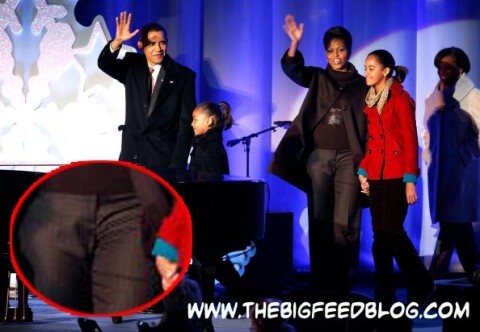
Michelle Obama penis
Michelle Obama bulge
Obama is the Abomination of the Bible (i.e. homosexual) because he's the Antichrist.
Obama – The Lottery and 666 – You have GOT TO SEE THIS! What are the CHANCES?

Michelle really looks like a man dressed up in drag.
Obama with his lover during college, Pakistani Mohammad Hasan Chandoo. They're holding hands here.
It can seriously be doubted that "Michelle" Obama is a woman. She's about as far from being a woman as Obama is of being a heterosexual. These two are a couple joined in hell.
This is ugly.
Michelle's appallingly distasteful in all things related to clothing.

August 3, 2013 - posted at BeforeIt'sNews

Must see related article...
Who Is Michael LaVaughn Robinson???
And this...
Claim: Obama Hid 'Gay Life' to Become President

Tag this page!
Submitted by SadInAmerica on Sun, 08/04/2013 - 6:09pm.