Thursday, September 5, 2013

Syrian Slam Dunk

Syrian Slam Dunk

So what is the American national security interest in any of this?
For a few days, President Obama almost had us convinced. Not that we should use military force to punish Syria, but that he actually was going to take responsibility for something.
But Saturday’s sudden announcement shocked even those closest to Obama. Instead of just attacking Syria, Obama decided to ask Congress for another “authorization for the use of military force” (AUMF). Which means that, as he has on everything from Obamacare to Benghazi, Obama chose to let someone else take responsibility for his actions.
The case for intervention in Syria’s civil war is mighty thin. Secretary of State Kerry presented an intelligence estimate last week that said our intelligence agencies had “high confidence” that Assad had used chemical weapons on his people. On Sunday, Kerry told MTP’s David Gregory that new information — from soil tests, hair samples and such — confirmed the use of Sarin gas on some Syrians.
Kerry said, “So this case is building and this case will build,” leaving the door open, but for what? For more Obama calls for action by someone else. On Saturday, he gave a Rose Garden statement which said, in part, “We should have this debate because the issues are too big for business as usual.” (If you hear a tinny echo in that rhetoric, you should. It’s the same “we can’t wait” tune by which Congress was mesmerized into the stimulus, Obamacare and so many tax and debt ceiling increases.)
When Congress comes back into session (under its leisurely vacation schedule, it’s due back on September 9) the Senate and House will receive some communication from Obama proposing some sort of AUMF version 2.0. They will hold hearings on it, debate it, amend it, and probably pass something approximating it.
The fact that they’ll probably pass something is due to the fact that the Republican “leadership” of national security affairs — at least the only ones who get media attention — is comprised of Obama’s most dedicated allies in Congress, Sens. John McCain and Lindsey Graham.
Making the rounds on all the Sunday talk shows, Kerry rebuffed David Gregory’s characterization of the intel justifying the strike as a “slam dunk.” Kerry said the phrase should be retired from our political lexicon.
The question isn’t whether the intel is right or wrong but whether there’s an American national security interest that will be significantly furthered by such an attack.
When Congress passed the first “AUMF” soon after 9-11, it wasn’t a declaration of war: it was a “to whom it may concern” letter authorizing war on anyone and any nation that had participated in the 9-11 attacks. The debate we had in 2002, while the buildup to the Iraq invasion was going on, wasn’t about a new AUMF or even changes to the year-old one. It was, crucially, about whether Saddam’s WMD posed a real and present danger to the United States.
President Bush and Colin Powell convinced us that they were. Today, President Obama hasn’t even bothered to try to convince us of anything.
What we have, instead, is Vichy Jon Kerry’s statement that it’s our responsibility to punish Assad. The only substitute for a presidential justification for war was Kerry’s Sunday statement that, “I can’t contemplate that the Congress would turn its back on all of that responsibility and the fact that we would have in fact granted impunity to a ruthless dictator to continue to gas his people.”
Kerry must have meant to say “immunity,” but whether or not he did, just what responsibility is he talking about?
To Obama we have a duty to punish Syria that arises not from an American national security interest in the Syrian civil war but from some moral calculation that floats above national concerns. He wants a “shot across the bow” for Assad to warn him that if he continued to gas his people we’d do something else. Or not.
But a shot across the bow — whether you’re Captain Teach or Obama — is meant to miss the target. Obama has said as much, denying any intent to overthrow Assad or even damage his regime significantly. He’s made no threat that America would remove Assad if he crosses Obama’s “red line” again, or any number of times. If the warning shot only threatens another one that will miss the target again, what’s the point?
It’s pointless to even overthrow Assad. Russia is building billions of dollars in ports around Syria. Iran, which is in an effective terrorist partnership with Syria, has hundreds (or maybe thousands) of terrorist Al Quds Force troops there. Those two Assad allies will ensure that any replacement for Assad will be as bad or worse. Again, what’s the point?

Exclusive: High Level Source Confirms Secret US Nuclear Warhead Transfer

Exclusive: High Level Source Confirms Secret US Nuclear Warhead Transfer

  •   The Alex Jones Channel Alex Jones Show podcast Prison Planet TV Infowars.com Twitter Alex Jones' Facebook Infowars store
Anthony Gucciardi & Alex Jones
Infowars.com
September 3, 2013
A high level source inside the military has now confirmed to us that Dyess Air Force base is actively moving nuclear warheads to the East Coast of the United States in a secret transfer that has no paper trail.
According to the high level military source, who has a strong record of continually being proven correct in deep military activity, the Dyess Air Force Commander authorized unknown parties to transfer the nuclear warheads to an unknown location that has been reported to be South Carolina, where the warheads will then be picked up and potentially utilized.
This is of particular interest not only due to the fact that the Syrian situation has escalated to the point of a very realistic hot war scenario, but due to the fact that Dyess has repeatedly denied the existence of nuclear warheads inside the base.
The brief report from the top level military source, which was written in a rush to get the information out, reads:
“Dyess is beginning to move out nuclear war heads today. I got a tap from DERMO earlier. He said it was the first time they have been even acknowledged since being put there in the 80′s. No signature was required for transfer… There was no directive. He said that Dyess Commander was on site to give authority to release. No one knew where they were going really, but the truck driver said to take them to South Carolina and another pick up will take them from there.”
The fact that this transfer was not signed for and there were no papers is key. It shows how the military is now secretly operating with the transfer of nuclear weapons, and what’s more, we know that DERMO (a military base in Florida) is a hotbed of special operations. Why is DERMO operating the nuclear warheads out of Dyess Air Force base with no paper trail? This shows that this is a highly secretive, black ops style move here that the military does not want on record.
The fact is that they don’t move all of these assets unless they plan on using them. Nuclear warheads are not simply moved to the East Coast for no reason, and the bottom line is that these missiles are likely being used for something even much greater than Syria.
dyess-nuke-site

Top Level Military Officer ‘Extremely Alarmed’

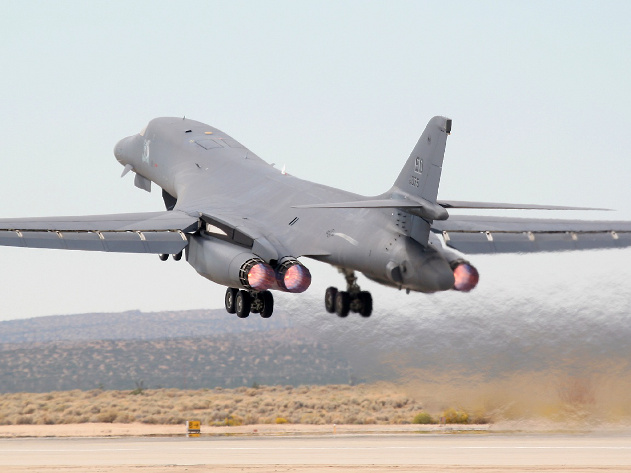
This leak inside the military industrial complex comes after prior sources have also revealed to us that B-1′s and B-2 bombers were ordered to head out of their respective bases (B-1B’s leaving Dyess specifically) across the nation and they haven’t come back. All of this is happening amid the growing Syrian crisis that has developed amid the ignition of a WW3-level wrestling match between the United States and Russia.  Now, based on the transfer to South Carolina that is not on record and was not signed for, we may be looking at a pattern that reveals an extremely hot war scenario.
And here’s what’s essential to understand: There’s no question that the Syrian issue is huge, and it’s very possible that the US military is now under orders by Obama to prepare a strike, but the reality is that the much greater issue here is what’s going on with the US and Russia. What we’re seeing here is a proxy war turned hot with Syria, and we’ve been covering this for months now. Even the mainstream media has reported in the past how the evolution of war in Syria has turned into a hot proxy war against Russia via the Syrian rebels and Assad’s troops.
b1bomber
We now even have the Russian media openly discussing the hot war by the United States against Russia and how this will essentially lead to World War 3.  But the fact of the matter is that we’re already progressively moving towards World War 3 . Obama and United States officials are already talking about boots on the ground in Syria and taking down the Russian-backed Assad regime. They are already moving forward following the blatantly staged chemical attacks that were absolutely carried out by the Obama-funded Syrian rebels in order to initiate a war scenario.
Why do you think Obama has been aiding in the training, funding, and supplying of the bloodthirsty Syrian rebels since 2011 through secret orders admitted by Reuters? The entire angle here is not to help the civilians of Syria, who the Obama-backed rebels already are beheading and murdering to cheering crowds. No, this has always been a buildup to a World War 3 scenario between Russia and the United States. And now, with the absolute insanity of Obama and the military industrial complex pushing these wars, it’s here.
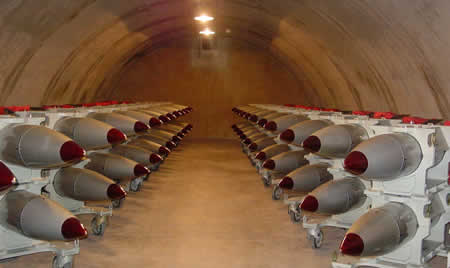
Nuclear weapons held in bunker, similar to the reports of the high level military source.

World War 3 Is Starting

I have spoken to my connections in the Russian media and they are all confirming that World War 3 is the hottest topic right now amid the populace, and the fact of the matter is that all of the top level military officials over there are looking at this Syrian incident as the catalyst — as the spark. There’s a reason that Russia has begun amassing 160,000 troops and heavy military equipment following an Israeli strike on Russian missiles in Syria. There’s a reason that the troops were called along with naval ships and bombers to attain ‘immediate combat readiness’ along the border. We reported on this months ago while the media was too busy focusing on the Trayvon Martin case to talk about the ignition of World War 3.
What we’re looking at right now is the beginning of World War 3 unless we manage to stop it. The elite are crazy enough and drunk enough with power to launch anything if it means advancing their vast lust for power and control. Thankfully, we now have a public that is much more awake to what’s going on and able to put a speed bump in the overall war plan as admitted by Obama adviser Zbigniew Brzezinski last week, but it will take a lot of awakening to stop Obama from launching these attacks that have been in the works for years.
We encourage you to continue checking out Infowars and Storyleak for more updates on this and the latest news and information we find out on this developing situation.
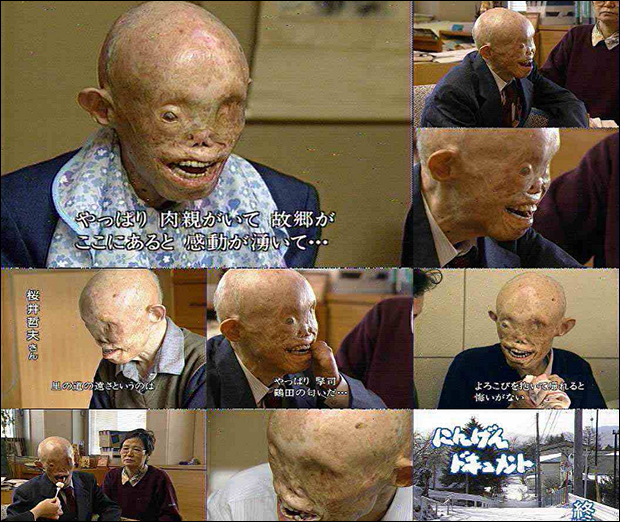
A Hiroshima victim of the nuclear strike — what everyone has to look forward to in the event of a nuclear war that is on the horizon if we don’t turn things around.
This article was posted: Wednesday, September 4, 2013 at 5:54 am

The colonial papers: FCO transparency is a carefully cultivated myth

The colonial papers: FCO transparency is a carefully cultivated myth

Professor of history Caroline Elkins, who has worked on historic Kenya files released by the British government, analyses its record of scrubbing and concealing embarrassing information
colonial papers-fco
Hanslope Park, Buckinghamshire, where the British colonial papers have been held. Photograph: Martin Argles for the Guardian
For decades, the British government has crafted and affirmed its own fictions of colonial benevolence. Its officials – both at home and in far-flung colonies – intensely managed a system of document culling, destruction, and removal in the waning days of imperial rule. Anything that might "embarrass" HMG was largely scrubbed, or sequestered, from the record. A colonial archive eventually made its way to Kew. Devoid of countless incriminating documents, it offers a particular reality about Britain's past, a past that was carefully tended long before the sun set on Britain's empire.
Today there is hope for some degree of transparency. The Foreign and Commonwealth Office (FCO) has just released more than 1,200 records from 12 former colonial territories. These documents are but a portion of the some 10,000 files that Britain removed from 37 of its colonies on the eve of decolonisation and recently "discovered" in Hanslope Park, the government communications centre. The foreign secretary, William Hague, has declared that the government will speedily process and make all of the files accessible to the public.
Some members of the media have heralded this as a watershed moment.
For certain we will learn much from these new documents. However, to celebrate their release as a historic moment is to miss the underside of the story. Recent events, placed in their historical context, suggest the FCO is hardly forthcoming. A full and candid release of the documents "found" at Hanslope Park would require a complete turnaround in government practice.
These documents came to light in the context of an ongoing legal case. In the high court in London, five elderly claimants are suing the British government. The FCO is the state's defendant. These Mau Mau veterans seek to prove, among other things, that state violence in the detention camps of late colonial Kenya was systematic, calculated and approved at the highest levels of government. This case is the first of its kind. If successful, it could open the door to multiple other claims from colonised populations. Indeed, murmurings of similar claims are already coming from Malayan and Cypriot veterans.
In the Mau Mau case, two years of countless document requests were met with FCO stonewalling. It was only through legal means that the FCO finally yielded in early 2011. The result was more than 1,500 files – all removed from Kenya at the time of decolonisation, and some of which the FCO has incrementally released to the Mau Mau claimants and their experts. A few months later, the FCO confessed that it had likewise found more than 8,800 files removed from another 36 former territories on the eve of colonial retreat. This despite the fact that the Kenya government had asked for – and been denied – the return of its files on three occasions. 13Thirteen boxes of "top secret" Kenya files are still missing.
As expert witness, I have had privileged access to the Kenya files. Together with a research team at Harvard, I have spent the last nine months reviewing the contents. This process has been anything but straightforward. Despite the legal context, the FCO has culled files, requiring multiple requests for full disclosure, and still files have not been forthcoming.
At least two of our findings have particular importance for today's "migrated archive" release. First, there is extensive evidence chronicling the process of document destruction and removal in Kenya. It began as early as 1958, five years before decolonisation. It was scarcely haphazard. The Colonial Office orchestrated a highly bureaucratised effort that required massive administrative manpower on the ground. Well-established procedures, such as the designation of "watch" and "legacy" files, and the creation of strongrooms for files to be destroyed or removed, were put into place. In total, officials in Kenya estimated that some 3½ tons of documents were marked for destruction. Incineration times were calculated in case "emergency destruction" was needed. Thousands more documents were to be transferred to Britain.
At the time, Britain was in the middle of parallel, massive cover-ups. While the government was besieged publicly with allegations of brutalities in the detention camps and the cover-up of systematised violence – and denying all allegations – it was culling and purging the record. The process – practised in other colonies as well – deliberately sought to remove incriminating evidence. So, too, did it seek to shape the future colonial archive and the realities it would produce.
Second, the files released in the Mau Mau case tell us a great deal more about previously documented events and individuals in Kenya. This is not historically insignificant. However, in the context of a legal case, the FCO has released files that further substantiate facts already in evidence. It is remarkable, given the untold numbers of files destroyed and removed, that these constitute the bulk of the documents handed over to the claimants and their experts.
The current release excludes territories such as Palestine and Rhodesia. The Cyprus files exclude the period of the emergency. The Malaya files cover very little of the contested emergency years. The Kenya documents are a meagre subset of the files released (though culled) in the context of the Mau Mau case. For all 12 colonies covered in today's release, there appears to be a great deal pertaining to finance, tourism, administration and the like.
The overall release process itself has been startling, and reminiscent of the FCO's behaviour in the Mau Mau case. The FCO initially asserted that the Hanslope Park records contained no "migrated archives" from British Guiana, a colony where there had been intense British and American military and security intervention from 1953 to 1964. This was and is frankly impossible, given that there were well-established procedures for handling archives at decolonisation by the 1960s.
Warning bells should be going off. The British government went to extraordinary lengths to fashion its colonial archive. The first release of the "migrated archives" is, at first glance, lacking in substantive files, particularly for former colonies like Cyprus and Malaya where future lawsuits potentially loom. Even in the context of a current legal case, the FCO continues to deny the existence of documents, slowly releases some, and culls others. Outside of the legal arena, there are fewer avenues to exert pressure on the FCO.
Since decolonisation, the colonial archive has been closely tied to the politics and practices of British governance. It has also produced realities as much as it has documented them. Until the FCO offers a full and unredacted release of all files found at Hanslope Park, a healthy dose of scepticism is crucial. If not – much like the benign decolonisation myth of yesteryear – we run the risk of overly applauding today's document release and reinforcing the FCO's myth of new-found transparency.
• Caroline Elkins is professor of history at Harvard University and Pulitzer-prizewinning author of Britain's Gulag: The Brutal End of Empire in Kenya

British colonial files released following legal challenge

British colonial files released following legal challenge

Suspected Mau Mau rebels held in a prison camp The files reveal how the British punished suspected Mau Mau rebels in the 1950s

Related Stories

Secret files from British colonial rule - once thought lost - have been released by the government, one year after they came to light in a High Court challenge to disclose them.
Some of the papers cover controversial episodes: the Mau Mau uprising in Kenya, the evacuation of the Chagos Islands, and the Malayan Emergency.
They also reveal efforts to destroy and reclassify sensitive files.
The Foreign Office says it is now releasing "every paper" it can.
But academics say the Foreign Office's "failure" to deliver the archive for decades has created a "legacy of suspicion".
In particular, the first batch of papers reveal:
  • Official fears that Nazis - pretending to catch butterflies - were plotting to invade East Africa in 1938
  • Detailed accounts of the policy of seizing livestock from Kenyans suspected of supporting Mau Mau rebels in the 1950s
  • Secret plans to deport a Greek Cypriot leader to the Seychelles despite launching talks with him to end a violent rebellion in Cyprus in 1955
  • Efforts to deport Chagos islanders from the British Indian Ocean Territories
  • Concerns over the "anti-American and anti-white" tendency of Kenyan students sent to study in the US in 1959 - the same year Barack Obama's Kenyan father enrolled at university in Hawaii
In January 2011 - following a High Court case brought by four Kenyans involved in the Mau Mau rebellion - the government was forced to admit that 8,800 files had been secretly sent to Britain from colonies, prior to their independence.
It said the files had been held "irregularly".
Professor David Anderson, an adviser to the Kenyans in the case and professor of African History at Oxford University, said progress had been made retrieving "the 'lost' British Empire archive", but added there was still a "lurking culture of secrecy" within government.
"The British government did lie about this earlier on... this saga was both a colonial conspiracy and a bureaucratic bungle."
He added that the release of the files would help "clear the air on Britain's imperial past".
'Migrated' files The 1,200 records being released are the first of six tranches to be made public at the National Archives by November 2013.
They cover the period between the 1930s and 1970s and were physically transferred or "migrated" to the UK.
The archive contains official documents from the former territories of Aden, Anguilla, Bahamas, Basutoland (Lesotho), Bechuanaland (Botswana), British Indian Ocean Territories, Brunei, Cyprus, Kenya, Malaya, Sarawak and the Seychelles.
The archive released on Wednesday details how British colonial officials selected files for secret "migration" back to Britain - using criteria set out in a 1961 memo by the Secretary of State for the Colonies, Iain Macleod.
'Burned and destroyed' They were instructed to keep papers that might embarrass the UK government, other governments, the police, military forces or public servants; might compromise sources of intelligence; or might be used unethically by ministers of successive governments.
BBC Officials in Kenya reclassified access to documents according to the reader's ethnicity and descent in order to restrict material
According to Kenyan ministry of defence files from 1961, administrators devised new classifications, such as "Watch", in order to withhold information from indigenous governments.
Files stamped with a "W" could only be viewed by a "British subject of European descent", while "legacy" files could be passed on to subsequent administrations.
Other new classifications included Personal, Delicate Source, and Guard - which could "not be communicated to the Americans".
The Kenyan files also contain references to material being destroyed.
One memo from April 1961 says: "To obviate a too laborious scrutiny of 'dead' files, emphasis is placed on destruction - a vast amount of paper in the Ministry of Defence secret registry and classified archives could be burnt without loss, and I should be surprised if the same does not apply to the CS's (chief secretary's) Office."
Colonial files from the Malayan administration also point to the destruction of papers - ahead of the country's independence in 1957.
In July 1956, an official writing to the private secretary to the British high commissioner questions what to do with archives relating to the Malayan Emergency - the 1948-1960 conflict with communist insurgents.
Referencing the "List C" papers, he writes: "I have been through them and it would seem that some contain items of historical interest in the event of anyone writing a history of the Emergency or biography of former high commissioners.
"The others should be dealt with in detail, but I have not time to do this. Would you agree to their disposal as suggested against individual files in the list?"
An appendix in the same file indicates that "List C" documents are to be "destroyed".
Researchers who have studied the colonial archive say there is little reference to the alleged massacre of 24 unarmed rubber plantation workers by British troops at Batang Kali in December 1948 - during the Malayan Emergency.
'Long overdue' Tony Badger, professor of history at Cambridge University - who has been appointed by the Foreign and Commonwealth Office (FCO) to review the files - said the government was releasing "every paper" it could, rather than merely "every paper of interest".
However, he added the release was "long overdue".
"Given the failure of the Foreign Office to acknowledge the existence of - and certainly the failure to manage the migrated archive until very recently, you can amply understand the legacy of suspicion amongst journalists and academics about these records", he said.
He estimated that "well under 1% of material" had so far been held back from release.
A Foreign Office spokesperson said the foreign secretary was "pleased" with the release and "committed" to making the colonial archive "available to the general public as soon as possible".
"These files are an important part of our history and by working with the National Archives we are ensuring that they can be accessed by current and future generations."

Britain releases secret colonial files that profile Barack Obama Sr.

Britain releases secret colonial files that profile Barack Obama Sr.

Britain has released thousands of classified files from the days of British colonial rule, including one that names President Barack Obama's father at the top of a list of "anti-white" Kenyans studying in the US.

barack obama father portrait 2012 4 18Enlarge
Family portraits, including one of President Barack Obama's father, hang in his family house on January 12, 2008 in Kogelo, western Kenya. (Peter Macdiarmid/AFP/Getty Images)
Advertisement
Britain has released thousands of classified files from the days of British colonial rule, including one that names President Barack Obama's father at the top of a list of "anti-white" Kenyans studying in the US.
The secret files — once thought lost — have been released by the government a year a High Court challenge was begun to disclose them, with the BBC citing the Foreign Office as saying it is now releasing "every paper" it can.
The papers cover such controversial episodes as the Mau Mau uprising in Kenya, the evacuation of the Chagos Islands, and the Malayan Emergency in the 1950s.
The papers were secretly sent back to the UK when the relevant countries achieved independence, and they even reveal plans by the authorities to burn sensitive files to stop them falling into the hands of post-independence governments.
The Guardian wrote that thousands of documents detailing some of the most shameful acts and crimes committed during the final years of the British empire were, indeed, destroyed.
That they were kept hidden for 50 years in a secret Foreign Office archive was in breach of legal obligations for them to be made public domain, the paper wrote.
The BBC cited academics as saying the "failure" to expose the archive had created a "legacy of suspicion".
More from GlobalPost: The Falklands War and other global gaffes
According to reports, the files reveal that:
  • Barack Obama, the father of the US president, was on the top of a list of names of "anti-American and anti-white" Kenyans studying in the US;
  • The government feared that Nazis — pretending to catch butterflies — were plotting to invade East Africa in 1938;
  • Britain continued a practice of "elimination of ranking terrorists" in British-controlled Malaya during the 1950s;
  • Britain planned to test a very virulent type of poison gas in what is now Botswana;
  • There were plans to deport a Greek Cypriot leader to the Seychelles despite launching talks with him to end a violent rebellion in Cyprus in 1955; and
  • Successive British governments did, in fact, dupe parliament and the public over the decision to give the US a military base in Diego Garcia and force out the islanders.
Obama's father appears on a list drawn up by British officials of Kenyan students in the US as "OBAMA, Barrack H," according to Agence France-Presse, citing British media reports.
A memo from a British diplomat in Washington to London in 1959 sets out concerns about Kenyan students in the US.
Obama senior enrolled at the University of Hawaii in 1959. He married Anne Durham in 1961 and Barack was born later that year.
Caroline Elkins of Harvard University, wrote in the Guardian that Foreign Office transparency on the subject of the files was a carefully-cultivated myth.
She wrote that the 1,200 or so records from 12 former colonial territories released by the Foreign and Commonwealth Office (FCO) were "but a portion of the some 10,000 files that Britain removed from 37 of its colonies on the eve of desalinization."
More from GlobalPost: Meet the people behind Turkey's 'miracle' 
http://www.globalpost.com/dispatch/news/regions/europe/united-kingdom/120418/britain-secret-barack-obama-father-white-kenya-hawaii

Barack Obama's father on colonial list of Kenyan students in US

Barack Obama's father on colonial list of Kenyan students in US

Formerly secret British file reveals US concerns that Kenyans studying in America were 'falling into the wrong hands'
Barack Obama's father tops a list made by British colonial officials of Kenyans studying in the US
The name of Barack Obama's father at the top of a list compiled by British colonial officials of Kenyans studying in the US. Photograph: The National Archives
The name of Barack Obama, the father of the American president, is on a list of names revealed in a hitherto secret British colonial file of Kenyans studying in the US.
The file notes that the US state department had told British officials in 1959 that they were concerned Kenyan students in America had a reputation for "falling into the wrong hands".
US officials complained that Kenyan students were becoming "anti-American and anti-white" just at the time Barack Obama Senior was given a grant to study in America.
British colonial administrators in Nairobi expressed concern about the calibre of Kenyans receiving scholarships to go to US universities, claiming they were "academically inferior" to their contemporaries who stayed in Africa to study. They criticised a US-based body, the African American Students Foundation, which gave Obama Senior grants to study business administration at the University of Hawaii, Honululu. Supporters of the project included the singer Harry Belafonte, the actor Sidney Poitier, and the baseball player Jackie Robinson.
The president's father is listed as "OBAMA, Barrack H" in the file of Kenyan students in the US drawn up by British colonial officials.
A year later, in 1960, Obama Senior met a white American called Ann Dunham on a Russian language course at the university. They married the next year and had a son, elected the first black US president in 2008.
Obama Senior died in car crash in Nairobi in 1982. His father, the president's grandfather, Onyango, was jailed by the British for six months in 1949 for his involvement in the Kenyan independence movement. Obama Senior's stepmother, Sarah Onyango Obama, has said he was subjected to beatings and abuse which caused permanent physical disabilities, and a hatred of the British.
• This article was amended on 18 April 2012. The original headline and text highlighted the fact that President Obama's father's name topped the list of Kenyan students in the US. To clarify: he topped the list because it was in alphabetical order.

National Archives release colonial papers – Wednesday 18 April

National Archives release colonial papers – Wednesday 18 April

Thousands of documents have been released. Here we explain why were they released, what they say, and how you can see them yourself
Colonial documents from the national archives.
Colonial documents from the national archives. Photograph: Owen Bowcott for the Guardian
9.29am: Today the Foreign Office has made public the first batch of thousands of "lost" colonial-era files believed to have been destroyed.
The documents were secretly sent back to the UK when former colonies became independent. They shed new light on how British officials ran countries such as Kenya, Cyprus and present-day Malaysia.
Thousands of documents detailing some of the most shameful acts and crimes committed during the final years of the British empire were systematically destroyed to prevent them falling into the hands of post-independence governments. Those papers that survived were flown back to Britain and hidden for 50 years in a secret Foreign Office archive in breach of legal obligations for them to be transferred into the public domain.
My colleagues Ian Cobain, Owen Bowcott and Richard Norton-Taylor were among the journalists who gained access to the files. Here they explain exactly how the documents came to be published and run through some of the most interesting material they found in them, including monthly intelligence reports on the "elimination" of the colonial authority's enemies in 1950s Malaya (now part of Malaysia), records showing ministers in London were aware of the torture and murder of Mau Mau insurgents in Kenya, including a case of a man said to have been "roasted alive", and papers detailing the lengths to which the UK went to forcibly remove islanders from Diego Garcia in the Indian Ocean.
Here's what they have published from the files today:
Barack Obama's father, Barack Obama Sr, in the 1960s Barack Obama's father, Barack Obama Sr, in the 1960s. Photograph: Reuters • The name of Barack Obama, the father of the American president, is on the top of a list of names revealed in a hitherto secret British colonial file of Kenyans studying in the US.
• In June 1957, Eric Griffiths-Jones, the attorney general of the British administration in Kenya, wrote to the governor, Sir Evelyn Baring, detailing the way the regime of abuse at the colony's detention camps was being subtly altered.
• The "elimination of ranking terrorists" was a repeated theme in secret monthly reports on casualty figures circulated by the director of intelligence in British-controlled Malaya during the 1950s.
• The extent to which successive British governments set out to hoodwink parliament and the public over the decision to give the US a military base in Diego Garcia and force out the islanders is now laid bare.
• Britain planned to test a very virulent type of poison gas in what is now Botswana, the colonial archives reveal.
And Caroline Elkins of Harvard University writes here that Foreign Office transparency is a carefully-cultivated myth.
I'll be looking through what other newspapers have discovered this morning and updating this blog with what I find.
Meanwhile if you want to ask Ian Cobain, Owen Bowcott and Richard Norton-Taylor more about what they found and what kind of records are there, please add a comment below.

How you can see the documents yourself

The National Archives in Kew. The National Archives in Kew. Photograph: Scott Barbour/Getty Images As yet the documents exist only in physical form at the National Archives in Kew, south-west London – but they are open to the public.
To view them, go to the National Archives, Bessant Drive, Richmond, TW9 4DU. The nearest train station is Kew Gardens or Kew Bridge.
You will need to get a readers' ticket – to get this bring two forms of ID (one with proof of name and signature and one with proof of address – acceptable forms of ID are listed here). The process may take up to 30 minutes. Once you have a readers' ticket it is valid for three years.
Then go and look in the catalogue to search for the records you want to look at. The records are not easy to search so National Archives staff have produced a guide – which you can view online here – to help you do so.
You can then order the documents you want and look at them in the reading room.
There are free public talks at 11am and 2pm in the National Archives' reading rooms today on how to access the records.
Here are the opening times of the National Archives:
Monday: closed
Tuesday: 9am-7pm
Wednesday: 9am-5pm
Thursday: 9am-7pm
Friday: 9am-5pm
Saturday: 9am-5pm
Sunday: closed
If you get the chance to go there and you find some records you think we should be writing about, please contact me at paul.owen@guardian.co.uk and let me know what you have found.
11.20am: Owen Bowcott explains how a lot of what happened to the files was due to a blend of intentional destruction and bureaucratic incompetence. Owen writes:
Owen Bowcott. The destruction of British colonial records in Kuala Lumpur was more haphazard than in Kenya. A file from the transferred Hanslope Park archive entitled "Disposal of Surplus Secret Records" (see photo at the top of this blog) contains lists of files to keep and others no longer needed.
The contents of "List A" are marked: "Suggestion destroy all."
"List B" files were to be transferred to the Colonial Office in London - though judging from named files not all reached the National Archives in Kew.
The third category, "List C", includes some deemed of historical interest but others marked "destroy". A "Law and Order" sequence from 1948, which might have covered the alleged Batang Kali massacre of 24 villagers by British troops, were not kept. They include files marked "situation reports", "intelligence", "internal security committee", "supplies", and "emergency meetings LDC".
Explaining the rationale for the selection, a relatively junior official in Kuala Lumpur, WJ Watts, wrote: "The strong room here is very overcrowded and the secretary of external defence has asked me to see if some of the older records cannot be cleared out … Presumably [some] are duplicated [in other archives]. If this is the case would you agree that they might be destroyed? ... List C deals with several bundles of old King's House files. I have been through them and it would seem that some contain items of historical interest in the event of anyone writing a history of the emergency or biography of former commissioners.
"The others should be dealt with in detail but I have not time to do this. Would you agree to their disposal as suggested against individual files in the list. Do you think his excellency's approval is necessary?"
Thus many key records may have been lost without even reference to senior officials.
12.04pm: Sam Marsden of the Press Association has also been through the files. He reveals:
• Britain had already made plans to deport Greek Cypriot leader Achbishop Makarios to the Seychelles when it launched talks with him about ending a violent rebellion in the 1950s. Whitehall ruled out holding Makarios in the former house of the chief justice of the Seychelles, called La Bastille, promoting Seychelles governor Sir WIlliam Addis to compose this rhyme:
Well in Sans Souci so let it be
Thus denying opposition opportunity
Of stating Archbishop ne peut pas rester tranquille [cannot sit still]
In a house with the name of La Bastille.
• Germans who claimed to be catching butterflies in pre-second world war Kenya caught the attention of British officials who feared the Nazis were plotting to invade east Africa. Two German men found camping in Kenya's Rabai Forest in August 1938 - one a suspected Nazi agent and the other a Palestinian of German descent - told British officials they were engaged in butterfly-catching. They claimed they had been recommended to go there by a well-known naturalist, but it turned out that he did not know them.
• On 5 January 1955 a British district commissioner seized a total of 30 sheep from four members of the Kikuyu tribe who worked on the farm of a Mr SJO Armstrong in the Naivasha district of Rift Valley Province. A short file on the case reveals that these were all the animals they owned. The action was prompted by suspicions that they had "harboured and fed" a 40-strong Mau Mau gang for a fortnight. An official wrote: "Owing to the fact that the Kikuyu labour was totally unco-operative and showed no signs of assisting security forces, native stock was seized."
12.12pm: Professor Richard Drayton, professor of imperial history at King's College, London, has emailed to say that he feels the release of the documents has been discredited by the Foreign Office's claim that the secret archive contained no sensitive documents from British Guiana. Drayton writes:
British Guiana saw one democratically-elected government overthrown by British troops in 1953, a heavy British security presence in the late 1950s, and then from 1962-64 a very well-documented joint British and American covert operation, which involved terror bombings, detention of politicians, and black propaganda. This United States involvement was unprecedented in any British colony. The decolonisation of British Guiana was part of the cold war: the security files kept at Government House would have been recognised to have potential future operational value and would have been repatriated, as were much less sensitive and useful documents from other colonies at the same time. Independent Guyana remained an area of interest for Britain and the United States: the British government would not have destroyed resources for its foreign and security policy, in particular the kind of thick data on local people which the Government House files would have held.
When the Kenyan historians requested documents in the past, they were told repeatedly by the FCO that they had been destroyed, only for the FCO, under judicial pressure, to yield them. It is to be hoped that the FCO will at some point "discover" its British Guiana archive.
12.48pm: US officials complained that Kenyan students were becoming "anti-white" in the year Barack Obama's father enrolled at university, the files reveal, according to a BBC report. US officials told a British diplomat that Kenyan students had a poor reputation, for falling into "bad hands" and "becoming both anti-American and anti-white". But a US official said the best thing to do would be to "hope to achieve is to exert some influence over them while they are here".
2.20pm: A reader emails to ask if there is anything in the files on Zimbabwe.
The files released today cover Aden, Anguilla, Bahamas, Basutoland, Bechuanaland, British Indian Ocean Territories, Brunei, Cyprus, Kenya, Malaya, Sarawak and the Seychelles.
Further files will be released between now and November 2013. This webpage gives the order in which they are expected to be released.
The files relating to Southern Rhodesia, now known as Zimbabwe, will be released in September 2013.
Here's the full list:

Aden - 18 April 2012
Anguilla - 18 April 2012
Bahamas (now being released in two tranches) - 18 April 2012 - September 2012
Basutoland - 18 April 2012 - July 2012
Bechuanaland - 18 April 2012
British Indian Ocean Territories - 18 April 2012
Brunei - 18 April 2012
Cameroons - July 2012
Ceylon - July 2012 - April 2013
Cyprus - 18 April 2012 - September 2013
Fiji - July 2012
Gambia - July 2012
Gilbert & Ellice Islands - July 2012
Gold Coast - July 2012
Jamaica - September 2012
Kenya - 18 April 2012 - September 2012
Malaya - 18 April 2012
Malta - September 2012 - September 2013
Mauritius - April 2013
New Hebrides - April 2013
Nigeria - April 2013
Northern Rhodesia - April 2013
Nyasaland - April 2013
Palestine - April 2013
Sarawak/Brunei - 18 April 2012
Seychelles - 18 April 2012
Sierra Leone - April 2013
Singapore - April 2013 - September 2013
Solomons (BSIP) - September 2013
Southern Rhodesia - September 2013
Swaziland - September 2013
Tanganyika - September 2013 - November 2013
Trinidad - November 2013
Turks & Caicos - November 2013
Uganda - November 2013
West Indies - November 2013
Western Pacific - November 2013
Zanzibar - November 2013
3.33pm: Reader Celia Kerr writes to ask if there is much material in the archive relating to Aden, "one of those 'small wars' [1963-67] that prefigured much that has happened since".
As my colleagues Ian Cobain, Owen Bowcott and Richard Norton-Taylor have written, most of the sensitive documents kept by colonial authorities in Aden (now part of Yemen), where the army's Intelligence Corps operated a secret torture centre for several years in the late 1960s, appear to have been destroyed.
Dr Laleh Khalili, senior lecturer in Politics of the Middle East at the School of Oriental and African Studies in London, writes to say she spent the morning at the National Archives going through the files. She reports:
The Aden material was ludicrous. Given the extent to torture and ill-treatment, detention and protest in that colony in its latter years, it was laughable to see the released files having to do with fisheries.
The Cyprus files only go up until 1938, as if keeping the more incendiary material from the period of Cypriot emergency for a future date when the hubbub around the files has died down.
I glanced at the Kenya material but trust that Professors Anderson and Elkins would be giving those a good once-over, so I then moved on Malaya.
The files mostly dated from 1955-1957 (rather than the period of 1948-1951 when half a million civilians were resettled in concentration camps quaintly called New Villages) and what was there was either oblique, opaque, or useless.
Most strikingly, the keywords "detention", "resettlement", "New Villages", "reservations" (another quaint word for concentration camps, this time used in Kenya), or "detainee", don't even appear in any of the aforementioned files.
It seems to me that there are some interesting things having to do with the Chagos Islands, Anguilla, and some parts of Africa (not those with major counterinsurgency operations, however), but those are not my areas of interest.
It seems to me that the whole release is a whitewash intended to mollify critics and save the government from embarrassment.
3.51pm: On Aden (see 3.33pm), Ian Cobain writes:
Ian Cobain There is already a great deal of material concerning Aden available for public view at the National Archives at Kew, including a mass of documentation generated by the visit in late 1966 by Roderic Bowen QC, a judge and former MP who had been asked to investigate following complaints that insurgents were being routinely tortured during interrogation.
Those papers include some very candid admissions by British colonial officials about the utility of such interrogations.
But while the Hanslope Park papers that were opened to the public at Kew today include some relative trivial documents from Aden - such as personnel reports and papers about transport matters - those historians who have been overseeing the transfer are struck by how little weighty material has survived.
Some assume that the more important documents were destroyed. Given the inability of the British government to influence the nature of the post-independence government in Aden, and the manner in which the British withdrew in 1967 - steadily retreating until they remained behind a perimeter that embraced little more than the colony's airport - it is quite possible that a decision was taken to destroy a great deal of documentation, rather than take the risk of it falling into insurgents' hands.
Owen Bowcott adds:
Owen Bowcott. A small amount of relatively pedestrian, bureaucratic material appears to have been passed over to the the National Archives on Aden. It was fewer than 40 files, most dating from 1962-67. They concerned subjects such as oil exploration, issuing of British passports and fisheries. Most of the Aden material is assumed to have been destroyed.
5.09pm: Dr Francis Gooding, a researcher on the Colonial Film: Moving Images of the British Empire website, writes:
While it is impossible to know exactly how many files from Aden were destroyed, I can confirm that the film collections of the (now closed) British Empire and Commonwealth Museum contain an amateur film from Aden which shows files marked "Top Secret" being thrown onto a bonfire.