Wednesday, April 3, 2013
9/11 SYNTHETIC TERRORISM MADE IN USA - UK Indymedia undefined www.indymedia.org.uk/media/2005/07/317436.pdf File Format: PDF/Adobe Acrobat by WG Tarpley - 2004 - Cited by 1 - Related articles To my wife Leah and my daughter Chloe, for their love and support during the wilderness years. E s'io al vero son timido amico,. Temo di perder vita tra coloro ...
http://www.indymedia.org.uk/media/2005/07/317436.pdf

Texas Attorney General Warns President Obama On Signing The UN Small Arms Treaty, (Video)
Tuesday, April 2, 2013 21:39

 UN adopts landmark arms treaty...: http://youtu.be/1EmH5lUg6-4 via @youtube
Original Doc Here: .oag.state.tx.us
A true Patriotic American from AUSTIN,TEXAS: Attorney General Greg Abbott today wrote to President Obama urging him not to sign the Arms Trade Treaty passed this morning by the United Nations General Assembly.
Dear Mr. President:
The Arms Trade Treaty agreed to today by the United Nations (UN) is a threat to Americans’ Constitutional liberty. I urge you to reject that treaty. If you sign it, and if the U.S. Senate ratifies the treaty, Texas will lead the charge to have the treaty overturned in court as a violation of the U.S. Constitution.
America is exceptional in part because our Constitution safeguards our individual liberties – including the right to keep and bear arms enshrined in the Second Amendment. During your reelection campaign, you consistently claimed to support Second Amendment rights. Yet the day after you won reelection, you announced your support for the Arms Trade Treaty, a UN agreement on firearms restrictions. That treaty:
- Fails to recognize the fundamental, individual right to keep and bear arms or the right to defend one’s family, person, and property;
- Empowers a new UN bureaucracy focused on firearms restrictions that will be run by international bureaucrats who are not accountable to the people of the United States;
- Employs vague and sweeping language that could be used for any number of future restrictions on Second Amendment rights; and
- Places no defined limits on the UN’s power to interfere with Second Amendment rights.
The UN has concluded its negotiations on the Arms Trade Treaty. It is now up to you to sign it - or reject it. Do not sign this treaty.
Agreeing to the treaty does more than trample Second Amendment rights. It also threatens to erode all liberties guaranteed to Americans in the Constitution by establishing the precedent that the UN has some level of authority to govern our lives. The very reason we fought for independence was to free ourselves from dictates by leaders in other lands. This treaty contradicts the underpinning philosophy of our country.
I recognize that the ostensible purpose of the treaty is to combat the illegal international trade of weapons into third-world war zones. The treaty could, however, draw law-abiding gun owners and gun store operators into a complex web of bureaucratic red tape created by a new department at the UN devoted to overseeing the treaty. For instance, the treaty appears to lay the groundwork for an international gun registry overseen by the bureaucrats at the UN.
The treaty also contains a vague and open-ended call for heightened domestic regulation of imported firearms, which make up a large percentage of the market for new firearms in this country. Indeed, the most troubling aspect of the treaty is the vagueness of its language. As with most so-called international-law documents promulgated by the UN, the draft treaty is not written using the precise, unambiguous language required of a good legal document. Instead, the treaty employs sweeping rhetoric and imprecise terminology that could be used by those who seek to undermine our liberties to impose any number of restrictions on the right of law-abiding Americans to keep and bear arms.
Treaties do not trump constitutional liberties. Even if you, as the President, signed and the Senate ratified the UN Arms Trade Treaty, our Constitution remains the Supreme Law of the Land and would supersede any treaty provision that violated Second Amendment rights. When the Constitution says, “the right of the people to keep and bear Arms, shall not be infringed,” it means no one—including the UN—can infringe that right.
These principles have long been recognized by the United States Supreme Court. In Reid v. Covert, 354 U.S. 1, (1957), the Supreme Court ruled that the United States cannot use its treaty power to violate Constitutional rights. In that case, an international agreement between the United States and the United Kingdom provided that dependents of American service members stationed in the UK would be tried for crimes by military tribunal and thus deprived of certain Sixth Amendment rights, including the right to trial by jury. When the wife of an American serviceman was accused of murder and convicted by a military court, the Supreme Court reversed the conviction. The Court rightly concluded that “no agreement with a foreign nation can confer power on the Congress, or on any other branch of Government, which is free from the restraints of the Constitution.” Id. at 16. In a passage that should be required reading in our public schools, the Supreme Court affirmed that “The United States is entirely a creature of the Constitution. Its power and authority have no other source. It can only act in accordance with all the limitations imposed by the Constitution.” Id. at 5-6. For that reason, the Supreme Court “has regularly and uniformly recognized the supremacy of the Constitution over a treaty.” Id. at 17.
As Reid v. Covert demonstrates, the Second Amendment is by no means the only constitutional right that can be threatened by international agreements. Regardless of their position on gun rights, all Americans should oppose any treaty that does not adequately protect our constitutional rights. If the Second Amendment can be trusted to international organizations that do not share our constitutional traditions, then why not the First Amendment? Why not the Fourth Amendment or the Fifth Amendment?
Our Nation’s Bill of Rights is a rare and precious thing. It does not exist anywhere else in the world. And the UN cannot be trusted with it. The UN includes foreign governments that have shown hostility to the kinds of constitutional liberties guaranteed to Americans. All Americans are harmed when unaccountable international bodies like the UN are empowered to interfere with our protected freedoms.
If the Arms Trade Treaty is ratified or applied in a way that violates the right of law-abiding Americans to keep and bear arms, it will be null and void. That will be little comfort, however, to law-abiding gun owners who would no doubt wonder why the United States entered into a treaty that empowers the UN to interfere with their Second Amendment rights. Rather than reach that point, the better course is to stop the treaty before the Senate can even consider it.
If the Arms Trade Treaty is not stopped at the federal level, I – and my fellow state attorneys general – will take up the fight to preserve the Constitution. Ratification of this treaty would compel immediate legal action to enforce the Constitution’s guarantee that the right of the people to keep and bear arms shall not be infringed.
Sincerely,
Greg Abbott
Attorney General Of Texas
Critical Reads: More News Mainstream Media Chooses To Ignore By Josey Wales, Click Here!


The Confiscation of Bank Savings to “Save the Banks”: The Diabolical Bank “Bail-In” Proposal
176
 54
69
351
54
69
351
54
69
351

Is a “Savings Heist” in the European Union and North America envisaged which could result in the outright confiscation of bank deposits?
In Cyprus, the entire payments system has been disrupted leading to the demise of the real economy.
Pensions and wages are no longer paid. Purchasing power has collapsed.
The population is impoverished.
Small and medium sized enterprises are spearheaded into bankruptcy.
Cyprus is a country with a population of one million.
What would happen if similar ‘hair cut” procedures were to be applied in the U.S. or the European Union?

According to the Washington based Institute of International Finance (IIF) (right) which represents the consensus of the global financial establishment, “the Cyprus approach of hitting depositors and creditors when banks fail, would likely become a model for dealing with collapses elsewhere in Europe.” (Economic Times, March 27, 2013).
It should be understood that prior to the Cyprus onslaught, the confiscation of bank deposits had been contemplated in several countries. Moreover, the powerful financial actors who triggered the bank crisis in Cyprus, are also the architects of the socially devastating austerity measures imposed in the European Union and North America.
Does Cyprus constitute a “model” or scenario?
Are there “lessons to be learned” by these powerful financial actors, to be applied elsewhere, at some later stage, in the Eurozone’s banking landscape?
 According
to the Institute of International Finance (IIF), “hitting depositors”
could become the “new normal” of this diabolical project, serving the
interests of the global financial conglomerates.
According
to the Institute of International Finance (IIF), “hitting depositors”
could become the “new normal” of this diabolical project, serving the
interests of the global financial conglomerates.This new normal is endorsed by the IMF and the European Central Bank. According to the IIF which constitutes the banking elites mouthpiece, “Investors would be well advised to see the outcome of Cyprus… as a reflection of how future stresses will be handled.” (quoted in Economic Times, March 27, 2013)
“Financial Cleansing”. Bail-ins in the US and Britain
What is at stake is a process of “financial cleansing” whereby the “too big to fail banks” in Europe and North America (e.g. Citi, JPMorgan Chase, Goldman Sachs, et al ) displace and destroy lesser financial institutions, with a view to eventually taking over the entire “banking landscape”.
The underlying tendency at the national and global levels is towards the centralization and concentration of bank power, while leading to the dramatic slump of the real economy.
Bail ins have been envisaged in numerous countries. In New Zealand a “haircut plan” was envisaged as early as 1997 coinciding with Asian financial crisis.
There are provisions in both the UK and the US pertaining to the confiscation of bank deposits. In a joint document of the Federal Deposit Insurance Corporation (FDIC) and the Bank of England, entitled Resolving Globally Active, Systemically Important, Financial Institutions, explicit procedures were put forth whereby “the original creditors of the failed company “, meaning the depositors of a failed bank, would be converted into “equity”. (See Ellen Brown, It Can Happen Here: The Bank Confiscation Scheme for US and UK Depositors,Global Research, March 2013)
What this means is that the money confiscated from bank accounts would be used to meet the failed bank’s financial obligations. In return, the holders of the confiscated bank deposits would become stockholders in a failed financial institution on the verge of bankruptcy.
Bank savings would be transformed overnight into an illusive concept of capital ownership. The confiscation of savings would be adopted under the disguise of a bogus “compensation” in terms of equity.
What is envisaged is the application of a selective process of confiscation of bank deposits, with a view to collecting debt while also triggering the demise of “weaker” financial institutions. In the US, the procedure would bypass the provisions of the Federal Deposit Insurance Corporation (FDIC) which insures deposit holders against bank failures:
No exception is indicated for “insured deposits” in the U.S., meaning those under $250,000, the deposits we thought were protected by FDIC insurance. This can hardly be an oversight, since it is the FDIC that is issuing the directive. The FDIC is an insurance company funded by premiums paid by private banks. The directive is called a “resolution process,” defined elsewhere as a plan that “would be triggered in the event of the failure of an insurer . . . .” The only mention of “insured deposits” is in connection with existing UK legislation, which the FDIC-BOE directive goes on to say is inadequate, implying that it needs to be modified or overridden. (Ibid)Because depositors are provided with a bogus compensation, they are not eligible to the FDIC deposit insurance.
Canada’s Deposit Confiscation Proposal
The most candid statement of confiscation of bank deposits as a means to “saving the banks” is formulated in a recently released document of the Canadian government entitled “Jobs, Growth and Long Term Prosperity: Economic Action Plan 2013″.
The latter was submitted to the House of Commons by Canada’s Minister of Finance Jim Flaherty on March 21 as part of a so-called “pre-budget” proposal.
A short section of the 400 report entitled “Risk Management Framework for Domestic Systemically Important Banks” identifies bail-in procedure for Canada’s chartered banks. The word confiscation is not mentioned. Financial jargon serves to obfuscate the real intent which essentially consists in stealing people’s savings.
Under the Canadian “Risk Management” project:
The Government proposes to implement a ‘bail-in’ regime for systemically important banks.
This regime will be designed to ensure
that, in the unlikely event that a systemically important bank depletes
its capital, the bank can be recapitalized and returned to
viability through the very rapid conversion of certain bank liabilities
into regulatory capital.”
This will reduce risks for taxpayers. The
Government will consult stakeholders on how best to implement a bail-in
regime in Canada.
What this signifies is that if one or more banks (or credit unions)
were obliged to “systemically deplete their capital” to meet the demands
of their creditors, the banks would be recapitalized through “the conversion of certain bank liabilities into regulatory capital.” The “certain bank liabilities” pertains (in technical jargon) to the money they owe their customers, namely to their depositors, whose bank accounts would be confiscated in exchange for shares (equity) in a “failing” banking institution.
“This will reduce risks for taxpayers” is a nonsensical statement. What this really means is that the government will not provide funding to compensate depositors who are victims of a failed banking institution, nor will it come to rescue of the failed institution.
Instead the depositors will be obliged to give up their savings. The money confiscated will then be used by the bank to meet their liabilities contracted with major financial creditor institutions. In other words, this entire scheme is “a safety net” for too big to fail banks, a mechanism which enables them as creditors to overshadow lesser banking institutions including credit unions, while precipitating either their collapse or their takeover.
Canada’s Financial Landscape
The Risk Management Bail in initiative is of crucial significance for Canadians across the land: once it is adopted by the House of Commons as part of the budget package, the Bail-in procedures could be applied.
The Conservative government has a parliamentary majority. There is a good likelihood that the Economic Action Plan 2013″ which includes the Bail-in procedure will be adopted.
While Canada’s Risk Management Framework intimates that Canada’s banks “are at risk”, particularly those which have accumulated large debts (as a result of derivative losses), a generalised across the board application of the “Bail in” is not contemplated.
 The
likely scenario in the foreseeable future is that Canada’s “big five”
banks, Royal Bank of Canada, TD Canada Trust, Scotiabank, Bank of
Montreal and CIBC (all of which have powerful affiliates operating in
the US financial landscape) will consolidate their position at the
expense of lesser (provincial level) banks and financial institutions.
The
likely scenario in the foreseeable future is that Canada’s “big five”
banks, Royal Bank of Canada, TD Canada Trust, Scotiabank, Bank of
Montreal and CIBC (all of which have powerful affiliates operating in
the US financial landscape) will consolidate their position at the
expense of lesser (provincial level) banks and financial institutions.The Government document intimates that the Bail-in could be used selectively “in the unlikely event that one [bank] becomes non-viable.” What this suggests is that at least one or more of Canada’s “lesser banks” could be the object of a bail-in. Such a procedure would inevitably lead to a greater concentration of bank capital in Canada, to the benefit of the larger financial conglomerates.
Displacement of Provincial Level Credit Unions and Cooperative Banks
There is an important network of over 300 provincial level credit unions and cooperative banks including the powerful Desjardins network in Quebec, the Vancouver City Savings Credit Union (Vancity) and the Coastal Capital Savings in British Columbia, Servus in Alberta, Meridian in Ontario, the caisses populaires in Ontario (affiliated to Desjardins), among many others, which could be the target of selective “Bail-in” operations.
In this context, what is likely to occur is a significant weakening of provincial level cooperative financial institutions, which have a governance relationship to their members (including representative councils) and which, in the present context, offer an alternative to the Big Five chartered banks. According to recent data, there are more than 300 credit unions and caisses populaires in Canada which are members of the “Credit Union Central of Canada”.
New Normal: International Standards Governing the Confiscation of Bank Deposits
 Canada’s Economic Action Plan 2013″ acknowledges that the proposed Bail-in framework
“will be consistent with reforms in other countries and key
international standards”. Namely, the proposed pattern of confiscating
bank deposits as described in the Canadian government document is
consistent with the model contemplated in the US and the European
Union. This model is currently a “talking point” (behind closed doors)
at various international venues regrouping central bank governors and
finance ministers.
Canada’s Economic Action Plan 2013″ acknowledges that the proposed Bail-in framework
“will be consistent with reforms in other countries and key
international standards”. Namely, the proposed pattern of confiscating
bank deposits as described in the Canadian government document is
consistent with the model contemplated in the US and the European
Union. This model is currently a “talking point” (behind closed doors)
at various international venues regrouping central bank governors and
finance ministers.The regulatory agency involved in these multilateral consultations is the Financial Stability Board (FSB) based in Basel, Switzerland and hosted by the Bank for International Settlements (BIS) (image right). The FSB happens to be chaired by the governor of the Bank of Canada, Mark Carney, who was recently appointed by the British government to head the Bank of England starting in June 2013.
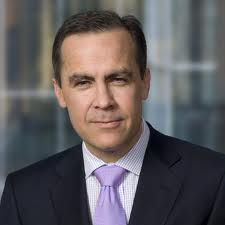 Mark
Carney, as Governor of the Bank of Canada, was instrumental in shaping
the provisions of the Bail-in for Canada’s chartered banks. Before his
career in central banking, he was a senior executive at Goldman Sachs,
which has played a behind the scenes role in the implementation of the
bank bailouts and austerity measures in the EU.
Mark
Carney, as Governor of the Bank of Canada, was instrumental in shaping
the provisions of the Bail-in for Canada’s chartered banks. Before his
career in central banking, he was a senior executive at Goldman Sachs,
which has played a behind the scenes role in the implementation of the
bank bailouts and austerity measures in the EU.The FSB’s mandate would be to coordinate the bail-in procedures, in liaison with the “national financial authorities” and “international standard setting bodies” which include the IMF and the BIS. It should come as no surprise: the deposit confiscation procedures in the UK, the US and Canada examined above are remarkably similar.
Bank “Bail-ins” vs. Bank “Bail-outs”
The bailouts are “rescue packages” whereby the government allocates a significant portion of State revenues in favor of failed financial institutions. The money is channeled from the coffers of the State to the banking conglomerates.
In the US in 2008-2009, a total of $1.45 trillion was channeled to Wall Street financial institutions as part of the Bush and Obama rescue packages.
These bailouts were considered as a De facto government expenditure category. They required the implementation of austerity measures. Together with massive hikes in military expenditure, the bailouts were financed through drastic cuts in social programs including Medicare, Medicaid and Social Security.
In contrast to the Bailout, which is funded from the public purse, the “Bail-in” requires the (in-house) confiscation of bank deposits. The bail-ins are implemented without the use of public funds. The regulatory mechanism is established by the central bank.
At the outset of Obama’s first term in January 2009, a bank bailout of the order of $750 billion was announced by Obama, which was added on to the 700 billion dollar bailout money allocated by the outgoing Bush administration under the Troubled Assets Relief Program (TARP).
The total of both programs was a staggering 1.45 trillion dollars to be financed by the US Treasury. (It should be understood that the actual amount of cash financial “aid” to the banks was significantly larger than $1.45 trillion. In addition to this amount defence allocations to fund Obama’s war economy (FY 2010) was a staggering $739 billion. Namely the bank bailouts plus defence combined ($2189 billion) eat up almost the totality of the federal revenues which in FY 2010 amounted to $2381 billion.
Concluding remarks
What is occurring is that the bank bailouts are no longer functional. At the outset of Obama’s Second term, the coffers of the state are empty. The austerity measures have reached a deadlock.
The bank bail-ins are now being contemplated instead of the “bank bailouts”.
The lower and middle income groups which are invariably indebted will not be the main target. The appropriation of bank deposits would essentially target the upper middle and upper income groups which have significant bank deposits. The second target will be the bank accounts of small and medium sized firms.
This transition is part of the evolution of the global economic crisis and the impasse underlying the application of the austerity measures.
The purpose of the global financial actors is to wipe out competitors, consolidate and centralize bank power and exert an overriding control over the real economy, the institutions of government and the military.

Even if the bail-ins were to be regulated and applied selectively to a limited number of failing financial institutions, credit unions, etc, the announcement of a program of confiscation of deposits could potentially lead to a generalized “run on the banks”. In this context, no banking institution would be regarded as safe.
The application of Bail-in procedures involving deposit confiscation (even when applied locally or selectively) would create financial havoc. It would interrupt the payments process. Wages would no longer be paid. Purchasing power would collapse. Money for investment in plant and equipment would no longer be forthcoming. Small and medium sized businesses would be precipitated into bankruptcy.
The application of a Bail-In in the EU or North America would initiate a new phase of the global financial crisis, a deepening of the economic depression, a greater centralization of banking and finance, increased concentration of corporate power in the real economy to the detriment of regional and local level enterprises.
In turn, an entire global banking network characterized by electronic transactions (which govern deposits, withdrawals, etc), –not to mention money transactions on the stock and commodity markets– could potentially be the object of significant disruptions of a systemic nature.
The social consequences would be devastating. The real economy would plummet as a result of the collapse in the payments system.
The potential disruptions in the functioning of an integrated global monetary system could result in a a renewed global economic meltdown as well as a drop off in international commodity trade.
It is important that people across the land, in the European Union and North America, nationally and internationally, forcefully act against the diabolical ploys of their governments –acting on behalf of dominant financial interests– to implement a selective process of bank deposit confiscation.
Colorado Sheriffs Sue Over New Gun Control Laws

Weld County Sheriff John Cooke said he won’t enforce either gun-control measure waiting to be signed into law by Gov. John Hickenlooper, saying the laws are “unenforceable” and would “give a false sense of security.”Now, a lawsuit is being filed in federal against the state on behalf of sheriffs who were ignored during debate about the legislation.
Cooke said Democratic lawmakers are uninformed but are scrambling in reaction to recent tragedies in the nation.
“They’re feel-good, knee-jerk reactions that are unenforceable,” he said.
Cooke said the bill requiring a $10 background check to legally transfer a gun would not keep firearms out of the hands of those who use them for violence.
“Criminals are still going to get their guns,” he said.
Cooke said the other bill would also technically ban all magazines because of a provision that outlaws any magazine that can be altered. He said all magazines can be altered to a higher capacity.
Cooke said he, like other county sheriffs, “won’t bother enforcing” the laws because it will be impossible for them to keep track of how the requirements are being met by gun owners. He said he and other sheriffs are considering a lawsuit against the state to block the measures if they are signed into law.
The lead plaintiffs are sheriffs from around Colorado. They claim the laws violate not only the Second Amendment, the right to keep and bear arms. but the 14th Amendment which requires laws to be easy to understand.Meanwhile MagPul, a Colorado based company that produces ammuntion magazines at a standard 30-round size, is leaving the state and taking 300 jobs with it.
Even Hickenlooper felt the need to clarify the language after he signed the bills into law.
“Any highly contentious bill is never going to be perfect,” said Hickenlooper.
“What we wanted to do is just provide a little clarity,” said Hickenlooper.
That is something many sheriffs around Colorado believe is missing from the laws.
“The governor refused to meet with them, the legislature ignored them so their claims now will be heard in federal court,” said Independence Institute spokesman Dave Kopel.
“And as the sheriffs have repeatedly said these laws are not enforceable,” said Kopel.
Kopel said Hickenlooper knows it because his staff called the Independence Institute hours before the signing for “clarity.”
“In a way his signing statement where he tries to fix the defective statute underscores the defectiveness of the statute,” said Kopel.
We have said all along that based on the legal problems and uncertainties in the bill, as well as general principle, we will have no choice but to leave if the Governor signs this into law. We will start our transition out of the state almost immediately, and we will prioritize moving magazine manufacturing operations first. We expect the first PMAGs to be made outside CO within 30 days of the signing, with the rest to follow in phases. We will likely become a multi-state operation as a result of this move, and not all locations have been selected. We have made some initial contacts and evaluated a list of new potential locations for additional manufacturing and the new company headquarters, and we will begin talks with various state representatives in earnest if the Governor indeed signs this legislation. Although we are agile for a company of our size, it is still a significant footprint, and we will perform this move in a manner that is best for the company and our employees.
It is disappointing to us that money and a social agenda from outside the state have apparently penetrated the American West to control our legislature and Governor, but we feel confident that Colorado residents can still take the state back through recalls, ballot initiatives, and the 2014 election to undo these wrongs against responsible Citizens.
The State is a ‘Black Hole’ Seeking to Swallow Up People for Their Radical Beliefs |
|
| By: Kevin Gosztola Friday October 12, 2012 6:30 pm | |
 Tweet
Tweet


Leah Plante, Grand Jury Resister
Plante was imprisoned at the SeaTac Federal Detention Center in Seattle on October 11 for refusing to cooperate with a grand jury. She entered a jail cell knowing she could be imprisoned until March 2014. But, she was resolute and chose to resist because talking to the grand jury would mean succumbing to fear and isolation. It would mean enabling the targeting of people in society for their political beliefs.
In the final week of July, the FBI raided homes in Portland, Oregon, and issued grand jury subpoenas to activists in Portland and Olympia and Seattle in Washington.
Plante eloquently described what happened in her statement:
The raid came just over two weeks after Occupy Seattle organizers had been raided. In both raids, the FBI took books and the seizure of books was a result of the FBI’s interest in “anarchist literature.” It indicated the FBI was not interested in simply prosecuting those responsible for vandalism on May Day. The FBI was interested in casting a wide net to investigate anarchists and target them for their beliefs.On the morning of July 25th, 2012, my life was turned upside down in a matter of hours. FBI agents from around Washington and Oregon and Joint Terrorism Task Force agents from Washington busted down the front door of my house with a battering ram, handcuffed my house mates and me at gunpoint, and held us hostage in our backyard while they read us a search warrant and ransacked our home. They said it was in connection to May Day vandalism that occurred in Seattle, Washington earlier this year. However, we suspected that this was not really about broken windows. As if they had taken pointers from Orwell’s 1984, they took books, artwork and other various literature as “evidence” as well as many other personal belongings even though they seemed to know that nobody there was even in Seattle on May Day…
This suspicion was soon confirmed. A Freedom of Information Act request submitted by Lauren Regan, an attorney with the Civil Liberties Defense Center, uncovered a document showing the grand jury had been empaneled on March 2, 2012, two months before May Day and any property damage occurred.
On July 25, Plante was not one of the people subpoenaed, however, on August 2, she was issued a grand jury subpoena, along with another person, Dennison Williams. They made a statement that they would not be talking to the grand jury:
Plante refused to testify and was re-subpoenaed for August 30. Then, the date was pushed to September 13. On September 13, she was granted immunity and, as she said in her statement, she lost her right to remain silent and could now be thrown in jail for civil contempt.We are releasing this statement to make clear our intention to resist the grand jury. We will not co-operate with their investigation. If we appear before the grand jury, we will not answer any questions other than our names. If we are asked additional questions, we will invoke our First, Fourth,and Fifth Amendment rights. Under no circumstances will we talk about other people.
This grand jury is a tool of political repression. It is attempting to turn individuals against each other by coercing those subpoenaed to testify against their communities. The secret nature of grand jury proceedings creates mistrust and can undermine solidarity. And imprisoning us takes us from our loved ones and our responsibilities.
But our passion for freedom is stronger than the state’s prisons. Our refusal to cooperate with the grand jury is a reflection of our own desires for a liberated world and our support for others who are working to bring that world into being. We support the efforts of all those who will be resisting this grand jury.
She was not jailed then because of how long it took for Plante to consult with an attorney and an hour-long recess. She was dismissed and received a fourth subpoena ordering her to appear before the grand jury on October 10. She would face a contempt hearing and likely be jailed if she did not talk.
*
A short biography on a support website, “Free Leah,” where her writings from prison will be appearing, says Plante is a twenty-four year-old anarchist. She identifies as a queer, vegan and straight edge, which is a punk subculture of that refrains from alcohol, tobacco or recreational drug use (meaning FBI agents would have a tough time fitting her up with drug charges, if they chose to go that route in their political persecution of her).
She is “genuine, compassionate and someone who stands out in a crowd as a fun and outgoing individual.” She is a screen printer, graphic designer, web designer and bicycle mechanic. She likes to look at pictures of space and cats. She enjoys rare anarcho-punk records. She likes to play the Magic: The Gathering card game. And, she regularly looks forward to bike riding, seeing friends and loved ones, “eating burritos and going on epic adventures.”
Contrary to what the FBI might think about anarchists, Plante does not seem like someone “seeking an ideology” to justify activities, unless people who play a game nerds are known to play often seek out anarchism to justify their love for a game involving wizards. It also does not seem like Plante is an individual, who would “turn to criminal activity out of frustration,” unless the FBI thinks anarchists who go on epic adventures and enjoy burritos are engaging in “criminal activity.”
Plante stated in the months before her October 10 court date, she had been having experiences that were causing bouts of depression and effects of post-traumatic stress disorder (PTSD), which she had struggled with for years:
Plante has a tattoo on her arm that reads, “Strive to Survive Causing Least Suffering Possible.” It is a creed she lives by and why, no matter what mental health issues she experiences, she has said she will not be cooperating with the grand jury.…For a while after the raid, I was in a constant state of panic and I could barely eat. Every time someone knocked on the door, every time I heard any sort of loud sound in my house, my heart sank and I thought ,“They’ve come for me.” To the day of this writing, I haven’t slept a full night since that cold July morning thanks to nausea inducing anxiety that wakes me up between 4:00 and 7:00 every single morning. After a couple months, the initial panic has faded into grim acceptance…
She has asked supporters to send paperback books to read while she is in jail resisting political repression. She also has asked supporters to write to her about “their pets, their travels, Lord of the Rings, space, ancient civilizations, paleontology, herbal medicine, DIY, crafting, bad 90s movies, pop culture, their kombucha brewing techniques, gardening, or whatever else comes to mind.”
Plante is one of three grand jury resisters in jail in the northwest right now (the others are Matthew Kyle Duran and Katherine “Kteeo” Olejnik).
The tool of movement suppression that is the grand jury is being wielded mightily. These resisters are being put in prison conditions that amount to solitary confinement. The state is trying to break them like they have tried to break members of previous movements in history. Like Will Potter writes, “This is part of the on-going demonization of anarchists, and dissent,” and, “Our response to what is happening today will have a direct impact on how these tactics are used tomorrow, against other social movements.”
Plante said in her statement:
Authorities are counting on the resisters having little public support because they are anarchists, but, from her biography, it is clear she is not simply an anarchist, a label the government attaches to activists never to acknowledge their beliefs but to discredit them. She is like others in her generation. She likes Lord of the Rings and Magic. She likes bad 90s movies (Is one of them To Wong Foo, Thanks for Everything! Julie Newmar? Wonder what the FBI would make of that?)…When they try to mercilessly gut communities, we do not scatter, we grow stronger, we thrive. I view this State repression like this: The State thinks it is a black hole that can destroy whatever it wants. In reality, it is much more like a stellar nursery, wherein it unintentionally creates new, strong anarchist stars…
The point is supporters have already begun to humanize Plante. She is not this blank person, which authorities can easily cast as the “typical” anarchist prone to criminal acts of violence. On the contrary, with paramilitary squads crashing down doors to sweep up private property and force political activists into informing on their friends or fellow organizers or else do time in prison, it is clear this is like Red Scare history all over again.
Here’s video of Leah reading her full statement:
Tuesday, April 2, 2013
SB13-013
Bill Title:
Secret Service Limited Peace Officer Authority
Active
Bill Long Title:
CONCERNING PEACE OFFICER AUTHORITY FOR CERTAIN EMPLOYEES OF THE UNITED STATES SECRET SERVICE.
Official Summary:
The
bill gives a special agent, uniform division officer, physical security
technician, physical security specialist, or special officer of the
United States secret service limited peace officer authority while
working in Colorado.
Senate Sponsors:
Leg. Text:
Leg. History:
Leg. Versions:
Bill Milestones:
Passed Senate
Passed House
Most Recent Status Updates
03/28/13 House Third Reading Passed
03/27/13 House Second Reading Special Order - Passed
03/22/13 House Second Reading Laid Over Daily
03/19/13 House Committee on Judiciary Refer Unamended to House Committee of the Whole
02/20/13 Introduced In House - Assigned to Judiciary
02/19/13 Senate Third Reading Passed
02/14/13 Senate Third Reading Laid Over to 02/19/2013
02/13/13 Senate Third Reading Laid Over Daily
02/08/13 Senate Third Reading Laid Over to 02/13/2013
02/07/13 Senate Third Reading Laid Over Daily
02/06/13 Senate Third Reading Laid Over Daily
02/05/13 Senate Third Reading Laid Over Daily
02/04/13 Senate Third Reading Laid Over Daily
02/01/13 Senate Second Reading Passed
01/31/13 Senate Second Reading Laid Over Daily
01/28/13 Senate Committee on Judiciary Refer Unamended to Senate Committee of the Whole
01/16/13 Senate Committee on Judiciary Lay Over Unamended - Amendment(s) Failed
01/09/13 Introduced In Senate - Assigned to Judiciary
it is clear that DHS is the army of the central bankers.
Army Officer Warns Of DHS Coup: Emergency Report


Infowars.com
March 24, 2013
Alex Jones reports on retired U.S. Army Captain Terry Hestilow’s letter to his senator demanding the Obama administration and DHS answer for the recent purchase of billions of rounds of ammunition and thousands of armored military personnel vehicles.
In this video, Alex explains why there has been a coup d’état against our Constitutional Republic, and breaks down why the office of the presidency is becoming dictatorial.
Read: Retired Army Captain Warns DHS Acquisitions are ‘bold threat of war’ Against the American People – http://www.infowars.com/retired-army-captain-warns-recent-dhs-acquisitions-are-bold-threat-of-war…
This article was posted: Sunday, March 24, 2013 at 11:43 am
Tags: constitution, gun rights
Army Officer Warns Of DHS Coup: Emergency Report: http://youtu.be/eMeYFsjF8e4 via @youtube
Obama Is A Puppet For Off Shore Coup: http://youtu.be/XEah95G0fE0 via @youtube
Subscribe to:
Posts (Atom)